We have come here to dedicate a cornerstone that was laid by the hand of the Almighty. On this towering wall of Rushmore, in the heart of the Black H… - Calvin Coolidge
""
We have come here to dedicate a cornerstone that was laid by the hand of the Almighty. On this towering wall of Rushmore, in the heart of the Black Hills, is to be inscribed a memorial which will represent some of the outstanding features of four of our Presidents, laid on by the hand of a great artist in sculpture. This memorial will crown the height of land between the Rocky Mountains and the Atlantic Seaboard, where coming generations may view it for all time.
English
Collect this quote
About
Calvin Coolidge
John Calvin Coolidge Jr. (4 July 1872 – 5 January 1933) was the 30th president of the United States (1923–29). A Republican lawyer from Vermont, Coolidge worked his way up the ladder of Massachusetts state politics, eventually becoming governor of that state. His response to the Boston Police Strike of 1919 thrust him into the national spotlight and gave him a reputation as a man of decisive action. Soon after, he was elected as the 29th vice president in 1920 and succeeded to the presidency upon the sudden death of Warren G. Harding in 1923. Elected in his own right in 1924, he gained a reputation as a small-government conservative.
Biography information from
Wikiquote·
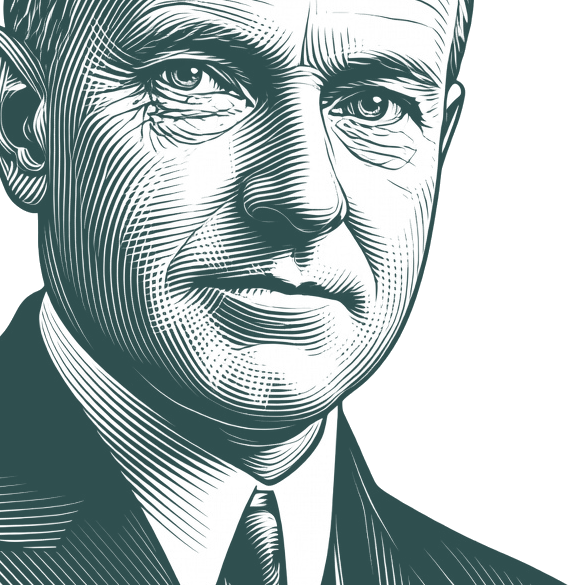
Portrait adapted from
Wikimedia Commons, Harris & Ewing (Public domain / CC0)
Also Known As
Birth Name:
John Calvin
Alternative Names:
John Calvin Coolidge Jr.
•
John Calvin Coolidge
•
President Coolidge
•
J. C. Coolidge
•
C. Coolidge
•
Silent Cal
•
Silent Cal Coolidge
The life of the farmer has its compensations but it has always been one of hardship.
Shipping board. The form of the organization of the Shipping Board was based originally on its functions as a semi judicial body in regulation of rates. During the war it was loaded with enormous administrative duties. It has been demonstrated time and again that this form of organization results in indecision, division of opinion and administrative functions, which make a wholly inadequate foundation for the conduct of a great business enterprise. The first principle in securing the objective set out by Congress in building up the American merchant marine upon the great trade routes and subsequently disposing of it into private operation can not proceed with effectiveness until the entire functions of the board are reorganized. The immediate requirement is to transfer into the Emergency Fleet, Corporation the whole responsibility of operation of the fleet and other property, leaving to the Shipping Board solely the duty of determining certain major policies which require deliberative action.
Enhance Your Quote Experience
Enjoy ad-free browsing, unlimited collections, and advanced search features with Premium.
We live in an age of science and of abounding accumulation of material things. These did not create our Declaration. Our Declaration created them. The things of the spirit come first. Unless we cling to that, all our material prosperity, overwhelming though it may appear, will turn to a barren scepter in our grasp.