The blest are the dead,
Who see not the sight
Of their own desolation; 50
This work of a night — This wreck of a realm — this deed of my doing — For … - Lord Byron
""
The blest are the dead, Who see not the sight Of their own desolation; 50 This work of a night — This wreck of a realm — this deed of my doing — For ages I’ve done, and shall still be renewing
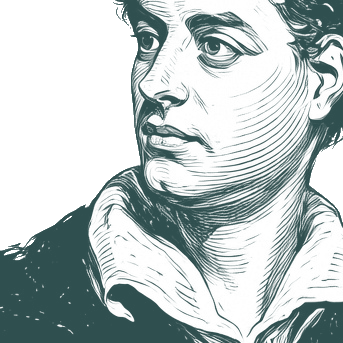
George Gordon (Noel) Byron, 6th Baron Byron (January 22 1788 – April 19 1824), generally known as Lord Byron, was an English poet and leading figure in Romanticism. He was the father of the mathematician Ada Lovelace.
Biography information from
Wikiquote·
Portrait adapted from
Wikimedia Commons, Thomas Phillips (Public domain / CC0)
Also Known As
Birth Name:
George Gordon Byron
Alternative Names:
George Gordon Byron, 6th Baron Byron
•
Noel Byron
•
George Gordon Byron Lord
•
George Gordon Byron, 6th Lord Byron
"8. "For who would trust the seeming sighs Of wife or paramour? Fresh feres will dry the bright blue eyes We late saw streaming o'er. For pleasures past I do not grieve, Nor perils gathering near; My greatest grief is that I leave No thing that claims a tear.
9. "And now I'm in the world alone, Upon the wide, wide sea: But why should I for others groan, When none will sigh for me? Perchance my dog will whine in vain, Till fed by stranger hands; But long ere I come back again, He'd tear me where he stands.
10. "With thee, my bark, I'll swiftly go Athwart the foaming brine; Nor care what land thou bear'st me to, So not again to mine. Welcome, welcome, ye dark blue waves! And when you fail my sight, Welcome, ye deserts, and ye caves! My native Land — Good Night!
A light broke in upon my brain, — It was the carol of a bird; It ceased, and then it came again, The sweetest song ear ever heard.
And if we do but watch the hour, There never yet was human power Which could evade, if unforgiven, The patient search and vigil long Of him who treasures up a wrong.