If any one will piously and soberly consider the sermon which our Lord Jesus spoke on the mount, as we read it in the Gospel according to Matthew, I … - Augustine of Hippo
""
If any one will piously and soberly consider the sermon which our Lord Jesus spoke on the mount, as we read it in the Gospel according to Matthew, I think that he will find in it, so far as regards the highest morals, a perfect standard of the Christian life: and this we do not rashly venture to promise, but gather it from the very words of the Lord Himself. For the sermon itself is brought to a close in such a way, that it is clear there are in it all the precepts which go to mould the life. … He has sufficiently indicated, as I think, that these sayings which He uttered on the mount so perfectly guide the life of those who may be willing to live according to them, that they may justly be compared to one building upon a rock.
English
Collect this quote
About
Augustine of Hippo
St. Augustine of Hippo (13 November 354 – 28 August 430) was a Christian theologian, rhetor, North African bishop, Doctor of the Catholic Church, saint, and a philosopher influenced in his early years by Manichaeism and the Neo-Platonism of Plotinus.
Biography information from
Wikiquote·
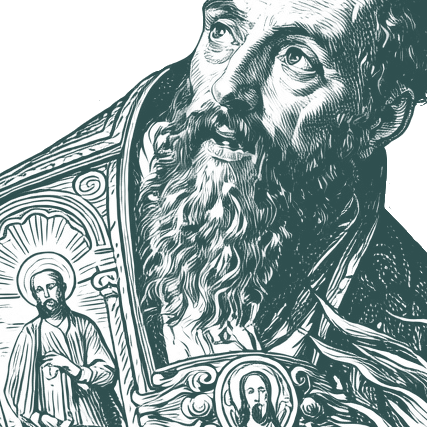
Portrait adapted from
Wikimedia Commons, Philippe de Champaigne (Public domain / CC0)
Also Known As
Native Name:
Aurelius Augustinus
Alternative Names:
Saint Augustine
•
Saint Austin
•
Augustine
•
St. Augoustinos
•
St. Augustine of Hippo
•
Aurelius Augustine
•
Aurelius Augustinus Hipponensis
•
St. Augustine
•
Augustinus
•
Saint Augustine of Hippo
•
Augustinus, Aurelius
•
bishop of Hippo
No greater gift could God bestow on men than to give them as their Head His Word, by whom He made all things, and to unite them as members to that Head. Thus the Word became both Son of God and Son of man: one God with the Father, one Man with men. Hence, when we offer our petitions to God, let it not detach itself from its Head. Let it be He, the sole Saviour of His body, our Lord Jesus Christ, the Son of God, who prays for us, who prays in us, and who is prayed to by us. He prays for us as our Priest; He prays in us as our Head; He is prayed to by us as our God. Let us therefore hear both our words in Him and His words in us.... We pray to Him in the form of God; He prays in the form of the slave. There He is the Creator; here He is in the creature. He changes not, but takes the creature and transforms it into Himself, making us one man, head and body, with Himself. We pray therefore to Him, and through Him, and in Him. We pray with Him, and He with us; we recite this prayer of the Psalm in Him, and He recites it in us.
Variation on the middle sentence: A thing is not necessarily false because it is badly expressed, nor true because it is expressed magnificently.
He loves Thee too little, who loves anything together with Thee, which he loves not for Thy sake.