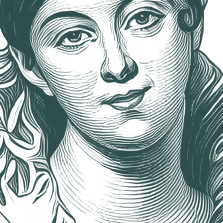
. . . the clock
Was placed where full the sun-beams fell;—what deep,
Simple morality spoke in those hands,
Going their way in silence, till a sound,
… - Letitia Elizabeth Landon
""
. . . the clock Was placed where full the sun-beams fell;—what deep, Simple morality spoke in those hands, Going their way in silence, till a sound, Solemn and sweet, made their appeal to Time, And the hour spoke its only warning!
Letitia Elizabeth Landon (August 14, 1802 – October 15, 1838) was an English poet and novelist, better known by her initials L. E. L. She was one of the richest sources of epigrams in the early nineteenth century and one reviewer compared her to Rochefoucauld. Sometimes she adopts an adversarial role, giving contradictory viewpoints. Some of her thoughts recur, either developed or refined, but over time she also threw out differing opinions on some subjects; changeability, she argues, is one of our principal traits and, as she has one character remark, truth is like the philosopher's stone, a thing not to be discovered.
[From Ernest von Hermanstadt]; Action—action in the sunshine—passion—but little feeling, and less thought: such was meant to be our existence. But we refine—we sadden and we subdue—we call up the hidden and evil spirits of the inner world—we wake from their dark repose those who will madden us. The heart is like the wood on yonder flickering hearth: green and fresh, haunted by a thousand sweet odours, bathed in the warm air, and gladdened by the summer sunshine—so grew it at first upon its native soil. But nature submitteth to art, and man has appointed for it another destiny: it is gathered, and cast into the fire. It seems, then, as if its life had but just begun. A new spirit has crept into the kindled veins—a brilliant light dances around it—it is bright—it is beautiful—and it is consumed! What remains?—A warmth on the atmosphere soon passing away, and a heap of blackened ashes! What more will remain of the heart?
Oh never another dream can be Like that early dream of ours, When the fairy Hope lay down to sleep, Like a child, among the flowers.
But the knowledge of the library is not that of the world; a youth of solitude is bad preparation for a manhood of action; from the earliest age we need to mingle with our kind; the child corrects and instructs the child more than their masters; our equals are the tools wherewith experience works out its lessons; and the play-ground, with its rival interests, its injustices, its necessity for the ready wit and the curbed temper is both miniature and prophesy of the world, which will but bring back the old struggles only with a sterner aspect, and the same successes, but with more than half their enjoyment departed.