Tegmark: That’s right, and there’s a more elemental example. In a certain sense, your genes have invented you. They built your brain so that you coul… - Sam Harris
""
Tegmark: That’s right, and there’s a more elemental example. In a certain sense, your genes have invented you. They built your brain so that you could make copies of your genes. That’s why you like to eat — so you won’t starve to death. And that’s why we fall in love — to make copies of our genes, right? But even though we know this, we still choose to use birth control, which is the opposite of what our genes want. Some people dismiss the idea that there will ever be anything smarter than humans for mystical reasons — because they think there’s something more than quarks and electrons and information processing going on in us. But if you take the scientific approach, that you really are your quarks, then there’s clearly no physical law of physics that precludes anything more intelligent than a human. We were constrained by how many quarks you could fit into a skull, and things like that — constraints that computers don’t have. It becomes instead more a question of time. And, as you said, there’s a relentless pressure to make smarter things, because it’s profitable and interesting and useful. The question isn’t if this will happen, but when. And finally, to come back to those ants. Suppose you’re in charge of a huge green-energy project, and just as you’re about to let the water flood the hydroelectric dam you’ve built, someone points out that there’s an anthill right in the middle of the flood zone. Now, you know the ants don’t want to be drowned, right? So you have to make a decision. What are you going to do? Harris: Well, in that case, too bad for the ants. Tegmark: Exactly. So we ought to plan ahead. We don’t want to end up like the ants.
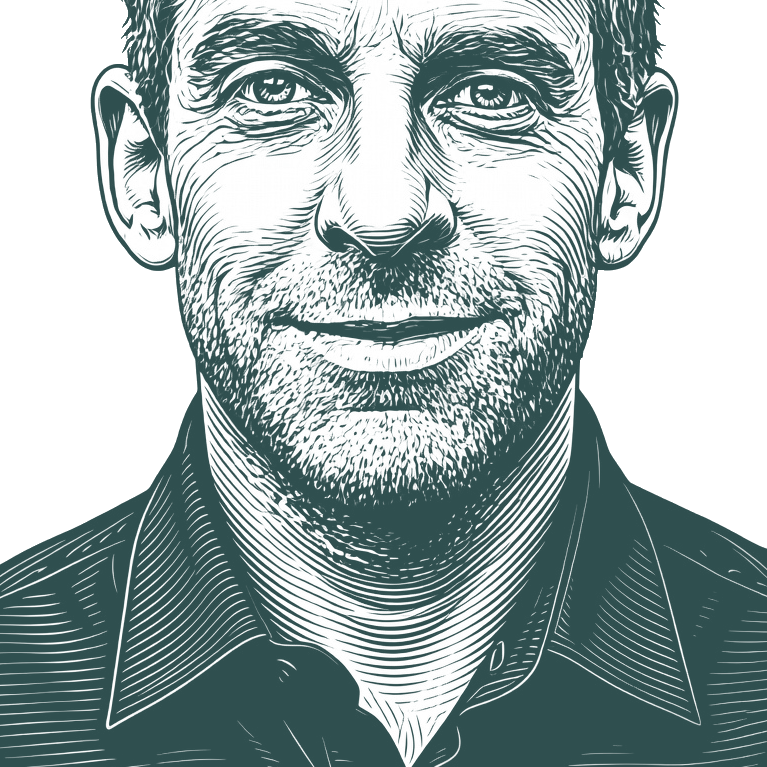
Samuel Benjamin Harris (born April 9, 1967) is an American author, philosopher, public intellectual, and neuroscientist, as well as the co-founder and CEO of Project Reason. He is the author of The End of Faith (2004), which won the PEN/Martha Albrand Award for First Nonfiction in 2005 and appeared on The New York Times best seller list for 33 weeks, Letter to a Christian Nation (2006), The Moral Landscape (2010), Lying (2011), Free Will (2012), and most recently Waking Up: A Guide to Spirituality Without Religion (2014).
Biography information from
Wikiquote·
Portrait adapted from
Wikimedia Commons, Cmichel67 (Christopher Michel) (CC BY-SA)
All I’m arguing for really is that we should have a conversation where the best ideas really thrive, where there’s no taboo against criticizing bad ideas, and where everyone who shows up, in order to get their ideas entertained, has to meet some obvious burdens of intellectual rigor and self-criticism and honesty — and when people fail to do that, we are free to stop listening to them. What religion has had up until this moment is a different set of rules that apply only to it, which is you have to respect my religious certainty even though I’m telling you I arrived at it irrationally.