Limited Time Offer
Premium members can get their quote collection automatically imported into their Quotewise collections.
" "In the beginning was belief, foolish belief, and faith, empty faith, and illusion, the terrible illusion. ... We believed in God, had faith in man, and lived with the illusion that in each one of us is a sacred spark from the fire of the shekinah, that each one carried in his eyes and in his soul the sign of God. This was the source — if not the cause — of all our misfortune.
Eliezer "Elie" Wiesel (30 September 1928 – 2 July 2016) was a Romanian-born American Jewish writer, professor, political activist, Nobel Laureate, and Holocaust survivor. He authored 57 books (mostly written in French and English), including Night, a work based on his experience incarcerated in the Auschwitz and Buchenwald concentration camps.
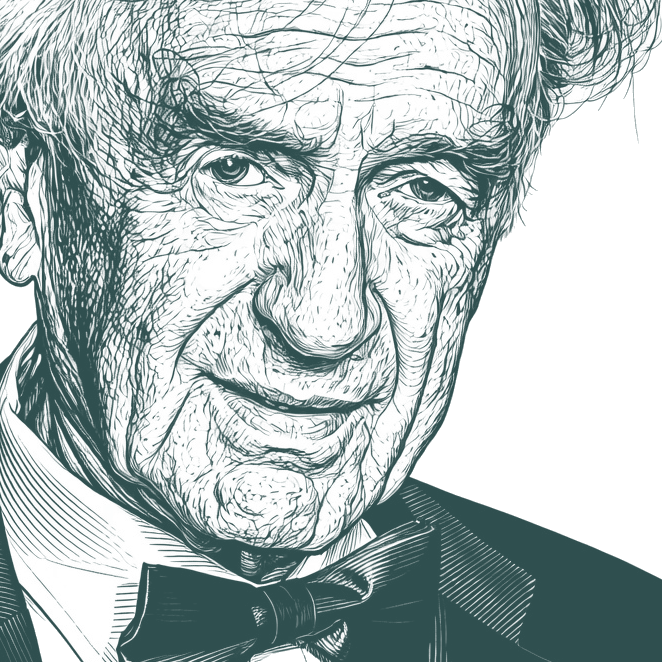
Biography information from Wikiquote
Premium members can get their quote collection automatically imported into their Quotewise collections.
Related quotes. More quotes will automatically load as you scroll down, or you can use the load more buttons.
An immoral society betrays humanity because it betrays the basis for humanity, which is memory. An immoral society deals with memory as some politicians deal with politics. A moral society is committed to memory: I believe in memory. The Greek word alethia means Truth, Things that cannot be forgotten. I believe in those things that cannot be forgotten and because of that so much in my work deals with memory... What do all my books have in common? A commitment to memory.
Add semantic quote search to your AI assistant via MCP. One command setup.
I remember when I became a refugee. Of all things it was on a Saturday, on the Sabbath. The gathering took place in the synagogue because the enemies, in their perverted imagination, tried so to hurt us that they sought to commit the worst crimes in our holiest place. Therefore they gathered the Jews in my town, Sighet, into the synagogue. And it is there that the first humiliation occurred. We stood in line; there was a table with many gendarmes, feathers in their hats. We would come and give our papers. We were so naïve. We thought that we were protected by our papers. Therefore proudly we took out our citizenship papers certifying us as citizens of Hungary. May I tell you, my good friends, what we had to do in order to obtain those papers? I cannot begin to even tell you. I remember the pain and the anguish that some of us had to go through to prove that our great-great-grandfather was born in a particular village, or town. Finally, we got the papers, and we felt good about them. We felt safe. But then, when I approached the table, in the synagogue courtyard, the officer didn't even look at the papers. He took them, tore them up and threw them into the wastebasket. I thus became a refugee. That feeling of being a refugee lasted and lasted for many, many years — in fact, until I came to this country.