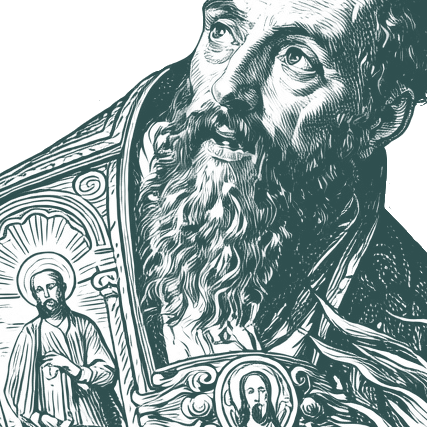
St. Augustine of Hippo (13 November 354 – 28 August 430) was a Christian theologian, rhetor, North African bishop, Doctor of the Catholic Church, saint, and a philosopher influenced in his early years by Manichaeism and the Neo-Platonism of Plotinus.
Biography information from
Wikiquote·
Portrait adapted from
Wikimedia Commons, Philippe de Champaigne (Public domain / CC0)
Also Known As
Native Name:
Aurelius Augustinus
Alternative Names:
Saint Augustine
•
Saint Austin
•
Augustine
•
St. Augoustinos
•
St. Augustine of Hippo
•
Aurelius Augustine
•
Aurelius Augustinus Hipponensis
•
St. Augustine
•
Augustinus
•
Saint Augustine of Hippo
•
Augustinus, Aurelius
•
bishop of Hippo
Spiritalis enim virtus Sacramenti ita est ut lux: et ab illuminandis pura excipitur, et si per immundos transeat, non inquinatur.
Magnus esse vis, a minimo incipe. Cogitas magnam fabricam construere celsitudinis, de fundamento prius cogita humilitatis. Et quantam quisque vult et disponit superimponere molem aedificii, quanto erit maius aedificium, tanto altius fodit fundamentum.
Unlimited Quote Collections
Organize your favorite quotes without limits. Create themed collections for every occasion with Premium.
It is this Good which we are commanded to love with our whole heart, with our whole mind, and with all our strength. It is toward this Good that we should be led by those who love us, and toward this Good we should lead those whom we love. In this way, we fulfill the commandments on which depend the whole Law and the Prophets: 'Thou shalt love the Lord Thy God with thy whole heart, and thy whole soul, and with thy whole mind'; and 'Thou shalt love thy neighbor as thyself.' For, in order that a man might learn how to love himself, a standard was set to regulate all his actions on which his happiness depends. For, to love one's own self is nothing but to wish to be happy, and the standard is union with God. When, therefore, a person who knows how to love himself is bidden to love his neighbor as himself, is he not, in effect, commanded to persuade others, as far as he can, to love God?