Try QuoteGPT
Chat naturally about what you need. Each answer links back to real quotes with citations.
" "During the two months of our stay at Biarritz, my passion for Colette all but surpassed my passion for Cleopatra. Since my parents were not keen to meet hers, I saw her only on the beach; but I thought of her constantly. If I noticed she had been crying, I felt a surge of helpless anguish that brought tears to my own eyes. I could not destroy the mosquitoes that had left their bites on her frail neck, but I could, and did, have a successful fistfight with a red-haired boy who had been rude to her. She used to give me warm handfuls of hard candy. One day, as we were bending together over a starfish, and Colette's ringlets were tickling my ear, she suddenly turned toward me and kissed me on the cheek. So great was my emotion that all I could think of saying was, 'You little monkey.
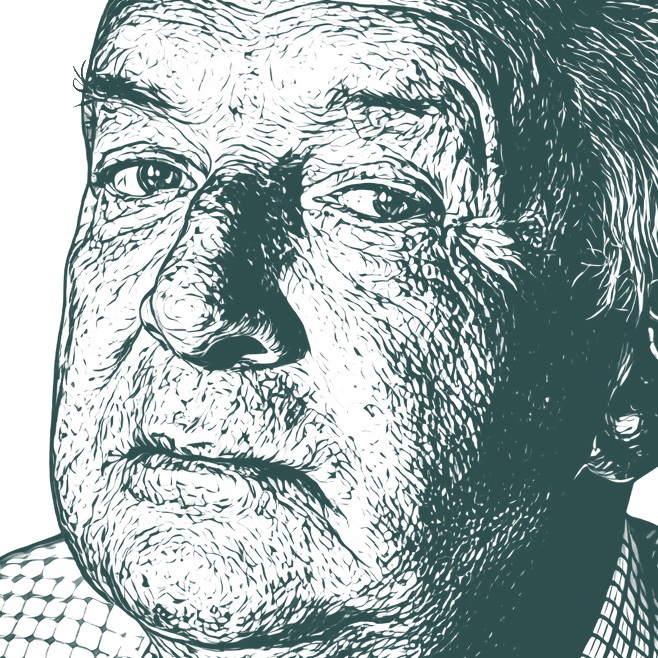
Vladimir Vladimirovich Nabokov (22 April (O.S. 10 April) 1899 – 2 July 1977) was a Russian-American writer. He wrote his first literary works in Russian, but gained international prominence as a masterly prose stylist for the novels he composed in English; his Lolita (1955) is frequently cited as one of the most important novels of the 20th century.
Biography information from Wikiquote
Chat naturally about what you need. Each answer links back to real quotes with citations.
Related quotes. More quotes will automatically load as you scroll down, or you can use the load more buttons.
Go on from here, Ada, please. (She). Billions of boys. Take one fairly decent decade. A billion of Bills, good, gifted, tender and passionate, not only spiritually but physically well-meaning Billions, have bared the jillions of their no less tender and brilliant Jills during that decade, at stations and under conditions that have to be controlled and specified by the worker, lest the entire report be choked up by the weeds of statistics and waist-high generalizations. No point would there be, if we left out, for example, the little matter of prodigious individual awareness and young genius, which makes, in some cases, of this or that particular gasp an unprecedented and unrepeatable event in the continuum of life or at least a thematic anthemia of such events in a work of art, or a denouncer’s article. The details that shine through or shade through: the local leaf through the hyaline skin, the green sun in the brown humid eye, tout ceci, vsyo eto, in tit and toto, must be taken into account, now prepare to take over (no, Ada, go on, ya zaslushalsya: I’m all enchantment and ears), if we wish to convey the fact, the fact, the fact — that among those billions of brilliant couples in one cross section of what you will allow me to call spacetime (for the convenience of reasoning), one couple is a unique super-imperial couple, sverhimperator-skaya cheta, in consequence of which (to be inquired into, to be painted, to be denounced, to be put to music, or to the question and death, if the decade has a scorpion tail after all), the particularities of their love-making influence in a special unique way two long lives and a few readers, those pensive reeds, and their pens and mental paintbrushes. Natural history indeed! Unnatural history — because that precision of senses and sense must seem unpleasantly peculiar to peasants, and because the detail is all: The song of a Tuscan Firecrest or a Sitka Kinglet in a cemetery cypress; a minty whiff of Summer Sa
Organize your favorite quotes without limits. Create themed collections for every occasion with Premium.
... one cannot read a book: one can only reread it. A good reader, a major reader, an active and creative reader is a rereader. And I shall tell you why. When we read a book for the first time the very process of laboriously moving our eyes from left to right, line after line, page after page, this complicated physical work upon the book, the very process of learning in terms of space and time what the book is about, this stands between us and artistic appreciation. When we look at a painting we do no have to move our eyes in a special way even if, as in a book, the picture contains elements of depth and development. The element of time does not really enter in a first contact with a painting. In reading a book, we must have time to acquaint ourselves with it. We have no physical organ (as we have the eye in regard to a painting) that takes in the whole picture and can enjoy its details. But at a second, or third, or fourth reading we do, in a sense, behave towards a book as we do towards a painting. However, let us not confuse the physical eye, that monstrous achievement of evolution, with the mind, an even more monstrous achievement. A book, no matter what it is - a work of fiction or a work of science (the boundary line between the two is not as clear as is generally believed) - a book of fiction appeals first of all to the mind. The mind, the brain, the top of the tingling spine, is, or should be, the only instrument used upon a book.