Enhance Your Quote Experience
Enjoy ad-free browsing, unlimited collections, and advanced search features with Premium.
" "…what things may be in themselves, I know not, and need not know because a thing is never presented to me otherwise than as a phenomena.
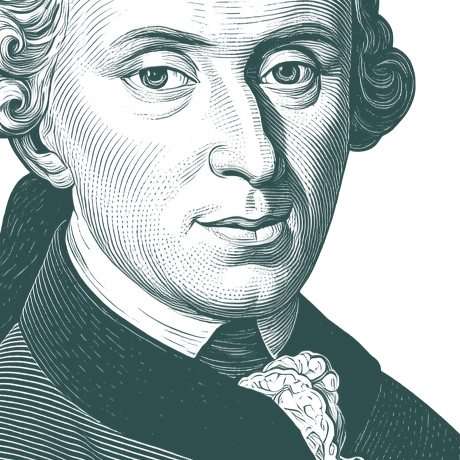
Immanuel Kant (22 April 1724 – 12 February 1804), born Emanuel Kant, was a German philosopher.
Biography information from Wikiquote
Enjoy ad-free browsing, unlimited collections, and advanced search features with Premium.
Related quotes. More quotes will automatically load as you scroll down, or you can use the load more buttons.
A will whose maxims necessarily coincide with the laws of autonomy is a holy will, good absolutely. The dependence of a will not absolutely good on the principle of autonomy (moral necessitation) is obligation. This, then, cannot be applied to a holy being. The objective necessity of actions from obligation is called duty. From what has just been said, it is easy to see how it happens that, although the conception of duty implies subjection to the law, we yet ascribe a certain dignity and sublimity to the person who fulfills all his duties. There is not, indeed, any sublimity in him, so far as he is subject to the moral law; but inasmuch as in regard to that very law he is likewise a legislator, and on that account alone subject to it, he has sublimity. We have also shown above that neither fear nor inclination, but simply respect for the law, is the spring which can give actions a moral worth.
"A good will is good not because of what it effects, or accomplishes, not because of its fitness to attain some intended end, but good just by its willing, i.e. in itself; and, considered by itself, it is to be esteemed beyond compare much higher than anything that could ever be brought about by it in favor of some inclinations, and indeed, if you will, the sum of all inclinations. Even if by some particular disfavor of fate, or by the scanty endowment of a stepmotherly nature, this will should entirely lack the capacity to carry through its purpose; if despite its greatest striving it should still accomplish nothing, and only the good will were to remain (not of course, as a mere wish, but as the summoning of all means that are within our control); then, like a jewel, it would still shine by itself, as something that has full worth in itself".