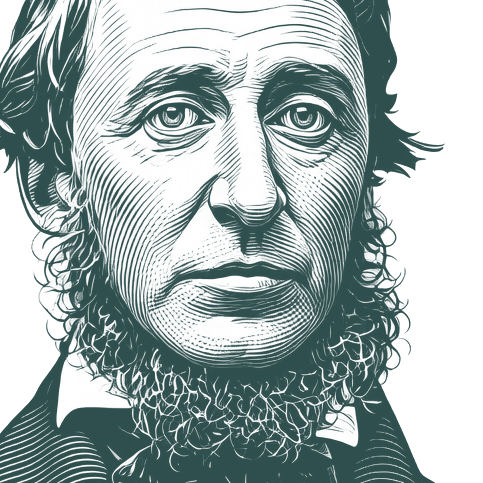
Henry David Thoreau (12 July 1817 – 6 May 1862) was an American essayist, poet, philosopher, abolitionist, naturalist, tax resister, development critic, surveyor, and historian. A leading transcendentalist, Thoreau is best known for his book Walden, a reflection upon simple living in natural surroundings, and his essay Resistance to Civil Government (also known as Civil Disobedience), an argument for disobedience to an unjust state.
Biography information from
Wikiquote·
Portrait adapted from
Wikimedia Commons, B. D. Maxham (Public domain / CC0)
Also Known As
Birth Name:
David Henry Thoreau
Alternative Names:
Thoreau
•
Henry D. Thoreau
•
Henry Thoreau
My life is like a stroll upon the beach, As near the ocean's edge as I can go.
Man is the artificer of his own happiness. Let him beware how he complains of the disposition of circumstances, for it is his own disposition he blames. If this is sour, or that rough, or the other steep, let him think if it be not his work. If his look curdles all hearts, let him not complain of a sour reception; if he hobbles in his gait, let him not grumble at the roughness of the way; if he is weak in the knees, let him not call the hill steep.
PREMIUM FEATURE
Advanced Search Filters
Filter search results by source, date, and more with our premium search tools.
Aeschylus had a clear eye for the commonest things. His genius was only an enlarged common sense. He adverts with chaste severity to all natural facts. His sublimity is Greek sincerity and simpleness, naked wonder which mythology had not helped to explain... Whatever the common eye sees at all and expresses as best it may, he sees uncommonly and describes with rare completeness. The multitude that thronged the theatre could no doubt go along with him to the end... The social condition of genius is the same in all ages. Aeschylus was undoubtedly alone and without sympathy in his simple reverence for the mystery of the universe.