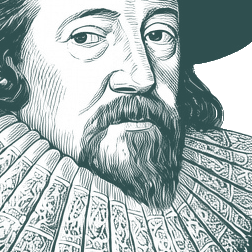
There was never proud man thought so absurdly well of himself, as the lover doth of the person loved; and therefore it was well said, That it is impo… - Francis Bacon
""
There was never proud man thought so absurdly well of himself, as the lover doth of the person loved; and therefore it was well said, That it is impossible to love, and to be wise.
Francis Bacon, 1st Viscount St. Alban KC (22 January 1561 – 9 April 1626) was an English philosopher, statesman and essayist. His works argued for the possibility of scientific knowledge based only upon inductive reasoning and careful observation of events in nature. Most importantly, he argued this could be achieved by use of a sceptical and methodical approach whereby scientists aim to avoid misleading themselves. His general idea of the importance and possibility of a skeptical methodology makes Bacon the father of the scientific method. This marked a new turn in the rhetorical and theoretical framework for science, the practical details of which are still central in debates about science and methodology today.
Biography information from
Wikiquote·
Portrait adapted from
Wikimedia Commons, Paul van Somer I / Formerly attributed to Frans Pourbus the Younger (Public domain / CC0)
Also Known As
Alternative Names:
Franciscus Bacon
•
Francis Bacon of Verulamius
•
Francis Bacon, Lord Verulam
•
Bacon, Francis, 1561-1626
•
Francis Bacon, Viscount Saint Alban
Portrait from Wikimedia Commons. Credit: Paul van Somer I / Formerly attributed to Frans Pourbus the Younger. Used under Public domain / CC0. Processed and styled by Quotewise.
Limited Time Offer
Premium members can get their quote collection automatically imported into their Quotewise collections.
"Lastly, concerning the disdain to receive into natural history things either common, or mean, or oversubtle and in their original condition useless, the answer of the poor woman to the haughty prince who had rejected her petition as an unworthy thing and beneath his dignity, may be taken for an oracle: "Then leave off being king." For most certain it is that he who will not attend to things like these as being too paltry and minute, can neither win the kingdom of nature nor govern it."