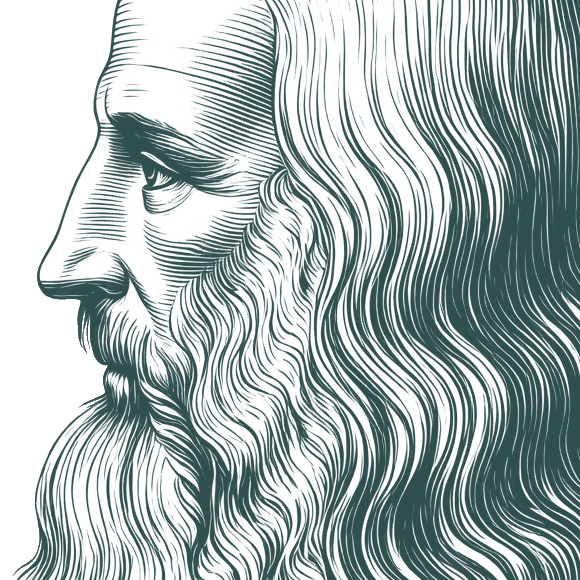
Leonardo di ser Piero da Vinci (15 April 1452 – 2 May 1519) was an Italian Renaissance painter, architect, inventor, engineer, sculptor, and musician. His best known painting is the Mona Lisa.
Biography information from
Wikiquote·
Portrait adapted from
Wikimedia Commons, Attributed to Francesco Melzi (Public domain / CC0)
Also Known As
Alternative Names:
Leonardo di ser Piero da Vinci
•
Leonardo
•
da Vinci
•
Leonard
•
Léonard
•
Leonardo Da Vinci
We see the most striking example of humility in the lamb which will submit to any animal; and when they are given for food to imprisoned lions they are as gentle to them as to their own mother, so that very often it has been seen that the lions forbear to kill them.
Patience serves as a protection against wrongs as clothes do against cold. For if you put on more clothes as the cold increases, it will have no power to hurt you. So in like manner you must grow in patience when you meet with great wrongs, and they will then be powerless to vex your mind.
Works in ChatGPT, Claude, or Any AI
Add semantic quote search to your AI assistant via MCP. One command setup.
If you condemn painting, which is the only imitator of all visible works of nature, you will certainly despise a subtle invention which brings philosophy and subtle speculation to the consideration of the nature of all forms — seas and plains, trees, animals, plants and flowers — which are surrounded by shade and light. And this is true knowledge and the legitimate issue of nature; for painting is born of nature — or, to speak more correctly, we will say it is the grandchild of nature; for all visible things are produced by nature, and these her children have given birth to painting. Hence we may justly call it the grandchild of nature and related to God.