Try QuoteGPT
Chat naturally about what you need. Each answer links back to real quotes with citations.
" "...a well-stocked mind is safe from boredom.
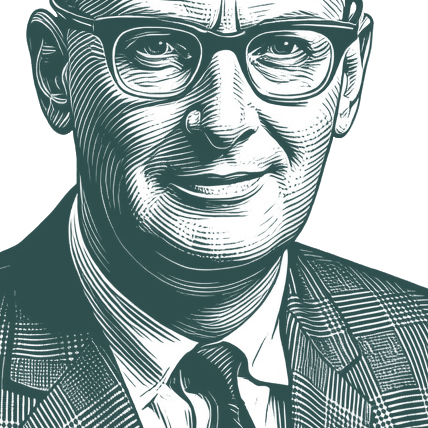
Sir Arthur Charles Clarke (16 December 1917 – 19 March 2008) was a British author, inventor and futurist, famous for his short stories and novels, among them 2001: A Space Odyssey (1968), and as a host and commentator in the British television series Mysterious World. For many years, Robert A. Heinlein, Isaac Asimov, and Clarke were known as the "Big Three" of science fiction.
Biography information from Wikiquote
Chat naturally about what you need. Each answer links back to real quotes with citations.
Related quotes. More quotes will automatically load as you scroll down, or you can use the load more buttons.
"What is human memory?" Manning asked. He gazed at the air as he spoke, as if lecturing an invisible audience - as perhaps he was. "It certainly is not a passive recording mechanism, like a digital disc or a tape. It is more like a story-telling machine. Sensory information is broken down into shards of perception, which are broken down again to be stored as memory fragments. And at night, as the body rests, these fragments are brought out from storage, reassembled and replayed. Each run-through etches them deeper into the brain's neural structure. And each time a memory is rehearsed or recalled it is elaborated. We may add a little, lose a little, tinker with the logic, fill in sections that have faded, perhaps even conflate disparate events.
"In extreme cases, we refer to this as confabulation. The brain creates and recreates the past, producing, in the end, a version of events that may bear little resemblance to what actually occurred. To first order, I believe it's true to say that everything I remember is false.
Premium members can get their quote collection automatically imported into their Quotewise collections.
Though the man-apes often fought and wrestled one another, their disputes very seldom resulted in serious injuries. Having no claws or fighting canine teeth, and being well protected by hair, they could not inflict much harm on one another. In any event, they had little surplus energy for such unproductive behavior; snarling and threatening was a much more efficient way of asserting their points of view.