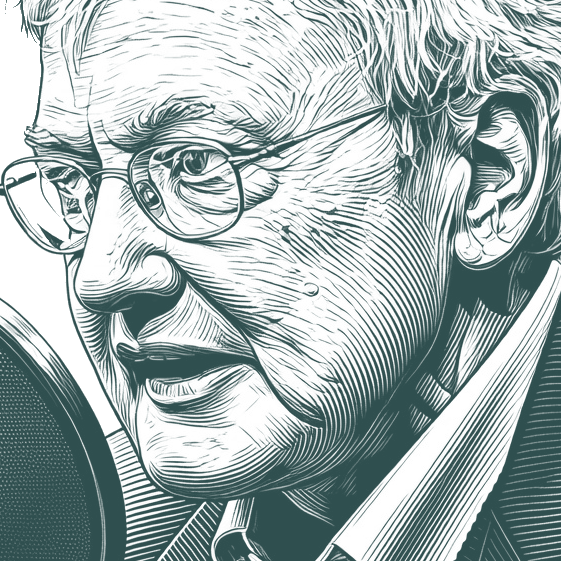
I believe that if, at the end, according to our abilities, we have done something to make others a little happier, and something to make ourselves a … - Roger Ebert
""
I believe that if, at the end, according to our abilities, we have done something to make others a little happier, and something to make ourselves a little happier, that is about the best we can do. To make others less happy is a crime. To make ourselves unhappy is where all crime starts. We must try to contribute joy to the world. That is true no matter what our problems, our health, our circumstances. We must try. I didn't always know this, and am happy I lived long enough to find it out.
Roger Joseph Ebert (18 June 1942 – 4 April 2013) was an American film critic, film historian, journalist, essayist, screenwriter, and author. He was a film critic for the Chicago Sun-Times from 1967 until his death in 2013. He was the first film critic to win a Pulitzer Prize for Criticism.
Biography information from
Wikiquote·
Portrait adapted from
Wikimedia Commons, Sound Opinions (CC BY-SA)
Siskel’s classic question, “Is this movie better than a documentary of the same actors having lunch?
I do not demand that all movies have a story to pull us from beginning to end, and indeed one of the charms of The Big Lebowski, the Coens' previous film, is how its stoned hero loses track of the thread of his own life. But with O Brother, Where Are Thou? I had the sense of invention set adrift; of a series of bright ideas wondering why they had all been invited to the same film.
Saving Silverman is so bad in so many different ways that perhaps you should see it, as an example of the lowest slopes of the bell-shaped curve. This is the kind of movie that gives even its defenders fits of desperation. Consider my friend James Berardinelli, the best of the Web-based critics. No doubt 10 days of oxygen deprivation at the Sundance Film Festival helped inspire his three-star review, in which he reports optimistically, "Saving Silverman" has its share of pratfalls and slapstick moments, but there's almost no flatulence." Here's a critical rule of thumb: You know you're in trouble when you're reduced to praising a movie for its absence of fart jokes, and have to add "almost"… as for Neil Diamond, Saving Silverman is his first appearance in a fiction film since The Jazz Singer, and one can only marvel that he waited 20 years to appear in a second film, and found one even worse than his first one.