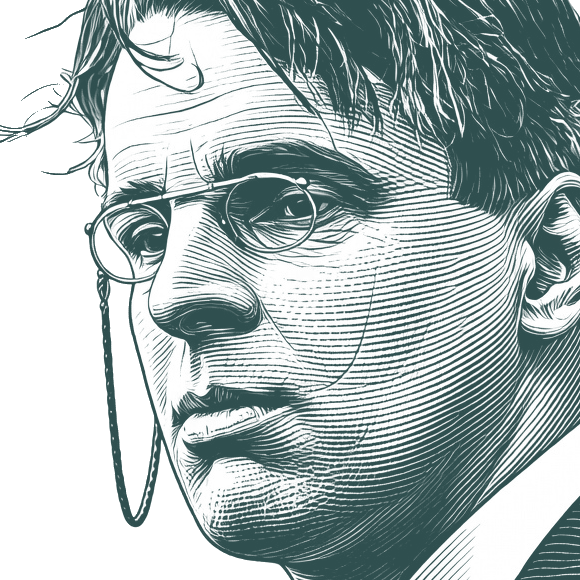
I had fallen into a profound dream-like reverie in which I heard him speaking as at a distance. 'And yet there is no one who communes with only one g… - William Butler Yeats
""
I had fallen into a profound dream-like reverie in which I heard him speaking as at a distance. 'And yet there is no one who communes with only one god,' he was saying, 'and the more a man lives in imagination and in a refined understanding, the more gods does he meet with and talk with, and the more does he come under the power of Roland, who sounded in the Valley of Roncesvalles the last trumpet of the body's will and pleasure; and of Hamlet, who saw them perishing away, and sighed; and of Faust, who looked for them up and down the world and could not find them; and under the power of all those countless divinities who have taken upon themselves spiritual bodies in the minds of the modern poets and romance writers, and under the power of the old divinities, who since the Renaissance have won everything of their ancient worship except the sacrifice of birds and fishes, the fragrance of garlands and the smoke of incense. The many think humanity made these divinities, and that it can unmake them again; but we who have seen them pass in rattling harness, and in soft robes, and heard them speak with articulate voices while we lay in deathlike trance, know that they are always making and unmaking humanity, which is indeed but the trembling of their lips.
William Butler Yeats (13 June 1865 – 28 January 1939) was an Irish symbolist poet, dramatist and mystic. He was awarded the Nobel Prize for Literature in 1923. He compiled the Oxford Book of Modern Verse.
Biography information from
Wikiquote·
Portrait adapted from
Wikimedia Commons, George Charles Beresford (Public domain / CC0)
Also Known As
Alternative Names:
W. B. Yeats
•
William Yeats
•
W.B. Yeats
•
WBY
The official designs of the Government, especially its designs in connection with postage stamps and coinage, may be described, I think, as the silent ambassadors of national taste.
For he comes, the human child! To the waters and the wild With a faery, hand in hand, From a world more full of weeping than he can understand.
Try QuoteGPT
Chat naturally about what you need. Each answer links back to real quotes with citations.
What matter if I live it all once more? Endure that toil of growing up; The ignominy of boyhood; the distress Of boyhood changing into man; The unfinished man and his pain Brought face to face with his own clumsiness; The finished man among his enemies?— How in the name of Heaven can he escape That defiling and disfigured shape The mirror of malicious eyes Casts upon his eyes until at last He thinks that shape must be his shape?