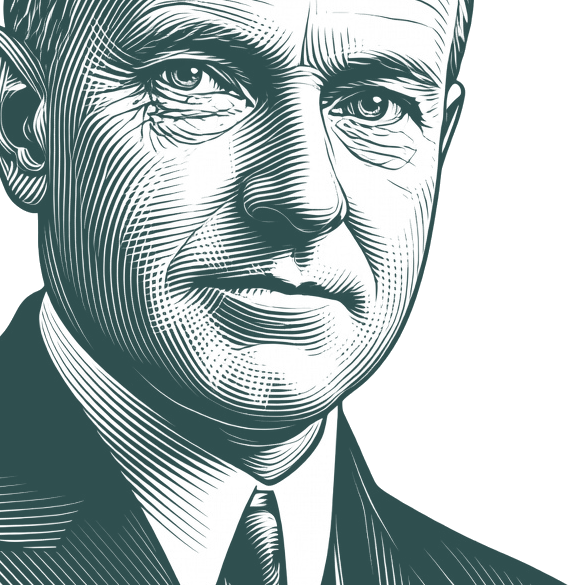
It is estimated that the value of the crops for this harvest year may reach $13,000,000,000, which is an increase of over $3,000,000,000 in three yea… - Calvin Coolidge
""
It is estimated that the value of the crops for this harvest year may reach $13,000,000,000, which is an increase of over $3,000,000,000 in three years. It compares with $7,100,000,000 in 1913, arid if we make deduction from the figures of 1924 for the comparatively decreased value of the dollar, the yield this year still exceeds 1913 in purchasing power by over $1,000,000,000, and in this interval there has been no increase in the number of farmers. Mostly by his own effort the farmer has decreased the cost of production. A marked increase in the price of his products and some decrease in the price of his supplies has brought him about to a parity with the rest of the Nation. The crop area of this season is estimated at 370,000,000 acres, which is a decline of 3,000,000 acres from last year, and 6,000,000 acres from 1919. This has been a normal and natural application of economic laws, which has placed agriculture on a foundation which is undeniably sound and beginning to be satisfactory.
English
Collect this quote
About
Calvin Coolidge
John Calvin Coolidge Jr. (4 July 1872 – 5 January 1933) was the 30th president of the United States (1923–29). A Republican lawyer from Vermont, Coolidge worked his way up the ladder of Massachusetts state politics, eventually becoming governor of that state. His response to the Boston Police Strike of 1919 thrust him into the national spotlight and gave him a reputation as a man of decisive action. Soon after, he was elected as the 29th vice president in 1920 and succeeded to the presidency upon the sudden death of Warren G. Harding in 1923. Elected in his own right in 1924, he gained a reputation as a small-government conservative.
Biography information from
Wikiquote·
Portrait adapted from
Wikimedia Commons, Harris & Ewing (Public domain / CC0)
Also Known As
Birth Name:
John Calvin
Alternative Names:
John Calvin Coolidge Jr.
•
John Calvin Coolidge
•
President Coolidge
•
J. C. Coolidge
•
C. Coolidge
•
Silent Cal
•
Silent Cal Coolidge
The chief business of the American people is business.
Taxes. Everyone desires a reduction of taxes, and there is a great preponderance of sentiment in favor of taxation reform. When I approved the present tax law, I stated publicly that I did so in spite of certain provisions which I believed unwise and harmful. One of the most glaring of these was the making public of the amounts assessed against different income-tax payers. Although that damage has now been done, I believe its continuation to be detrimental To the public welfare and bound to decrease public revenues, so that it ought to be repealed.
Unlimited Quote Collections
Organize your favorite quotes without limits. Create themed collections for every occasion with Premium.
He represents a noble and courageous dedication to the service of freedom. He never sought for personal aggrandizement, but under heavy temptation remained loyal to the great Cause. He possessed a character that will abide with us through the generations. He loved his fellowmen, and believed in the ultimate triumph of self-government. But he did not consider France had reached a point where representative democracy would be a success. He was practical. Like Washington, he refused a crown. But while he believed Washington performed a great service in accepting the Presidency of America, he believed he had performed an equally great service in rejecting the Presidency of France. He approved the establishment of our republican institutions, and hoped they would one day be a model for the government of his own country. He recognized the value of native institutions. So, while he was loyal to freedom, he was likewise loyal to the Crown. In moderation, in the gradual evolution of government and society, he perceived the strongest defense against both reaction and revolution, and the greatest hope for permanent progress.