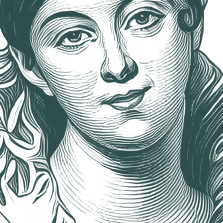
Letitia Elizabeth Landon (August 14, 1802 – October 15, 1838) was an English poet and novelist, better known by her initials L. E. L. She was one of the richest sources of epigrams in the early nineteenth century and one reviewer compared her to Rochefoucauld. Sometimes she adopts an adversarial role, giving contradictory viewpoints. Some of her thoughts recur, either developed or refined, but over time she also threw out differing opinions on some subjects; changeability, she argues, is one of our principal traits and, as she has one character remark, truth is like the philosopher's stone, a thing not to be discovered.
Violets! — deep-blue violets! April's loveliest coronets! There are no flowers grow in the vale, Kiss'd by the dew, wooed by the gale, — None by the dew of the twilight wet, So sweet as the deep-blue violet!
Well he knows his course has hasted Through delicious sin, Borne tumultuously along. Never have the stars above Chronicled such utter love.
There is no attachment stronger, more unselfish, than the love between brother and sister, thrown on the world orphans at an early age, with none to love them save each other. They feel how much they stand alone, and this draws them more together. Constant intercourse has given that perfect understanding which only familiarity can do ; hopes, interests, sorrows, are alike in common. Each is to either a source of pride ; it is the tenderness of love without its fears, and the confidence of marriage, without its graver and more anxious character. The fresh impulses of youth are all warm about the heart.