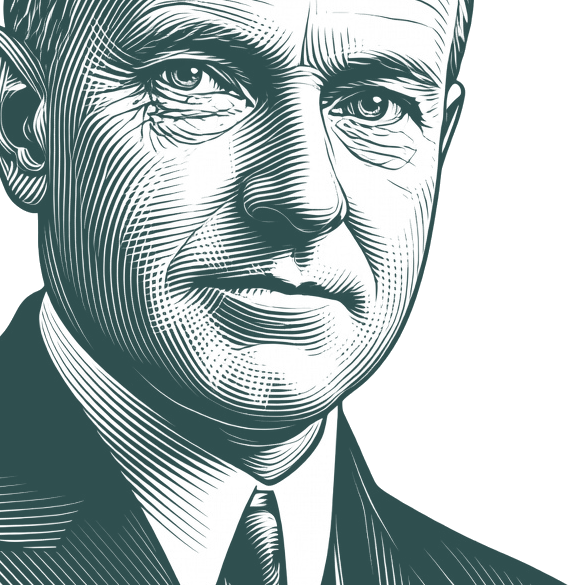
Không gì trên thế giới có thể thay thế sự kiên trì. Tài năng cũng không phải; bởi ngày nay việc người có tài nhưng không thành đạt đã trở nên quá phổ… - Calvin Coolidge
""
Không gì trên thế giới có thể thay thế sự kiên trì. Tài năng cũng không phải; bởi ngày nay việc người có tài nhưng không thành đạt đã trở nên quá phổ biến. Thiên tài lại càng không; hình ảnh thiên tài ẩn giấu đã trở thành câu ngạn ngữ ngày nay. Có học vấn cũng không thể, thế giới tràn ngập những người có học bị lãng quên. Chỉ riêng sự kiên trì và quyết tâm mới có tác dụng lớn.
John Calvin Coolidge Jr. (4 July 1872 – 5 January 1933) was the 30th president of the United States (1923–29). A Republican lawyer from Vermont, Coolidge worked his way up the ladder of Massachusetts state politics, eventually becoming governor of that state. His response to the Boston Police Strike of 1919 thrust him into the national spotlight and gave him a reputation as a man of decisive action. Soon after, he was elected as the 29th vice president in 1920 and succeeded to the presidency upon the sudden death of Warren G. Harding in 1923. Elected in his own right in 1924, he gained a reputation as a small-government conservative.
Biography information from
Wikiquote·
Portrait adapted from
Wikimedia Commons, Harris & Ewing (Public domain / CC0)
Also Known As
Birth Name:
John Calvin
Alternative Names:
John Calvin Coolidge Jr.
•
John Calvin Coolidge
•
President Coolidge
•
J. C. Coolidge
•
C. Coolidge
•
Silent Cal
•
Silent Cal Coolidge
His early profession as a lawyer was abandoned to enter academic life. In this chosen field he attained the highest rank as an educator, and has left his impress upon the intellectual thought of the country. From the Presidency of Princeton University he was called by his fellow citizens to be the Chief Executive of the State of New Jersey. The duties of this high office he so conducted as to win the confidence of the people of the United States, who twice elected him to the Chief Magistracy of the Republic. As President of the United States he was moved by an earnest desire to promote the best interests of the country as he conceived them. His acts were prompted by high motives and his sincerity of purpose can not be questioned. He led the nation through the terrific struggle of the world war with a lofty idealism which never failed him. He gave utterance to the aspiration of humanity with an eloquence which held the attention of all the earth and made America a new and enlarged influence in the destiny of mankind.
They did not deny the existence of authority. They recognized it and undertook to abide by it, and through obedience to it secure their freedom. They made their appeal and rested their cause not merely upon earthly authority, but in the very first paragraph of the Declaration of Independence asserted that they proposed 'to assume, among the powers of the earth, the separate and equal station to which the laws of nature and of nature's God entitle them.' And as they closed that noble document in which they submitted their claims to the opinions of mankind they again revealed what they believed to be the ultimate source of authority by stating that they were also 'appealing to the Supreme Judge of the world for the rectitude of' their 'intentions.'.
Unlimited Quote Collections
Organize your favorite quotes without limits. Create themed collections for every occasion with Premium.
It is these two thoughts of union and peace which appear to me to be especially appropriate for our consideration on this day. Like all else in human experience, they are not things which can be set apart and have an independent existence. They exist by reason of the concrete actions of men and women. It is the men and women whose actions between 1861 and 1865 gave us union and peace that we are met here this day to commemorate. When we seek for the chief characteristic of those actions, we come back to the word which I have already uttered — renunciation. They gave up ease and home and safety and braved every impending danger and mortal peril that they might accomplish these ends. They thereby became in this Republic a body of citizens set apart and marked for every honor so long as our Nation shall endure. Here on this wooded eminence, overlooking the Capital of the country for which they fought, many of them repose, officers of high rank and privates mingling in a common dust, holding the common veneration of a grateful people. The heroes of other wars lie with them, and in a place of great preeminence lies one whose identity is unknown, save that he was a soldier of this Republic who fought that its ideals, its institutions, its liberties, might be perpetuated among men. A grateful country holds all these services as her most priceless heritage, to be cherished forevermore.