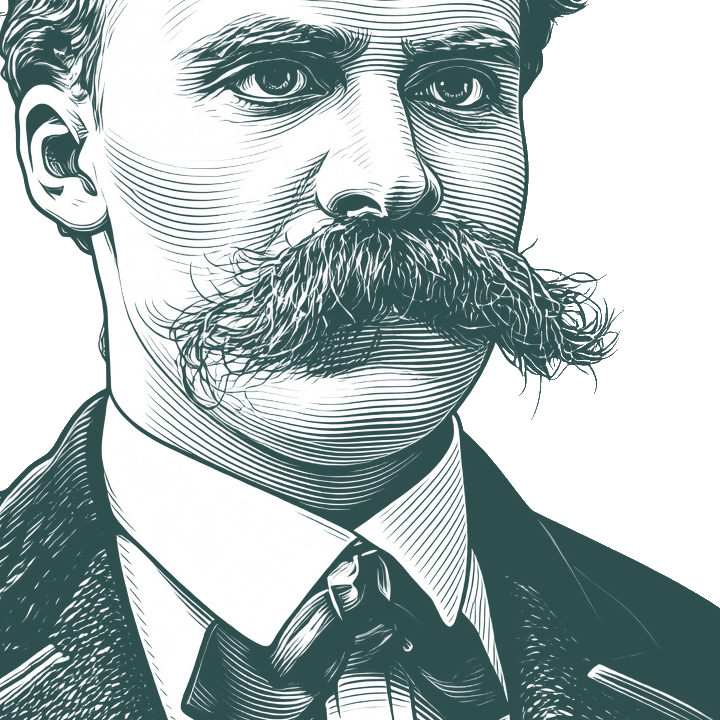
It says nothing against the ripeness of a spirit that it has a few worms. - Friedrich Nietzsche
""
It says nothing against the ripeness of a spirit that it has a few worms.
English
Collect this quote
About
Friedrich Nietzsche
Friedrich Wilhelm Nietzsche (15 October 1844 – 25 August 1900) was a German philosopher, cultural critic, composer, poet, writer, and philologist whose work has exerted a profound influence on modern intellectual history. His critiques of contemporary culture, religion, and philosophy centered on a basic question regarding the foundation of values and morality.
Biography information from
Wikiquote·
Portrait adapted from
Wikimedia Commons, Friedrich Hermann Hartmann (Public domain / CC0)
Also Known As
Alternative Names:
Friedrich Wilhelm Nietzsche
•
Nietzsche
Nun aber schien Sokrates die tragische Kunst nicht einmal "die Wahrheit zu sagen": abgesehen davon, dass sie sich an den wendet, der "nicht viel Verstand besitzt", also nicht an den Philosophen: ein zweifacher Grund, von ihr fern zu bleiben. Wie Plato, rechnete er sie zu den schmeichlerischen Künsten, die nur das Angenehme, nicht das Nützliche darstellen und verlangte deshalb bei seinen Jüngern Enthaltsamkeit und strenge Absonderung von solchen unphilosophischen Reizungen; mit solchem Erfolge, dass der jugendliche Tragödiendichter Plato zu allererst seine Dichtungen verbrannte, um Schüler des Sokrates werden zu können.
Saying yes to life, even in its strangest and hardest problems.
Works in ChatGPT, Claude, or Any AI
Add semantic quote search to your AI assistant via MCP. One command setup.