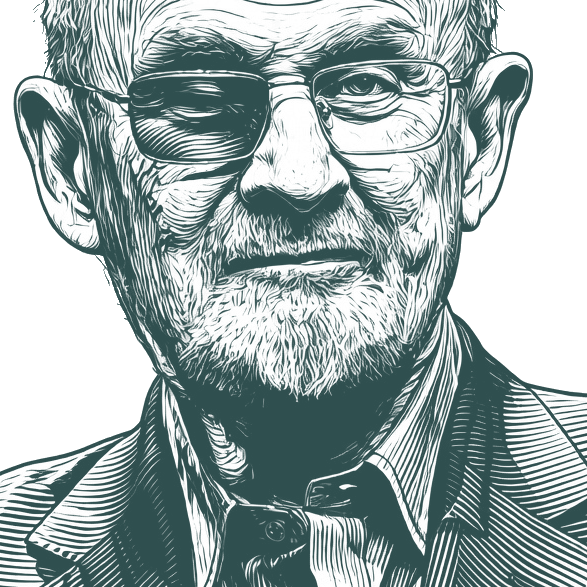
Sir Salman Rushdie (born Ahmed Salman Rushdie, Urdu: أحمد سلمان رشدی, Hindi: अह्मद सलमान रश्डी on 19 June 1947) is an Indian-born British novelist and essayist. Most of his work is set on the Indian subcontinent.
Biography information from
Wikiquote·
Portrait adapted from
Wikimedia Commons, Elena Ternovaja (CC BY-SA)
Also Known As
Native Name:
سلمان رُشدی
•
سلمان رشدی
Alternative Names:
Sir Ahmed Salman Rushdie
•
Rushdie
•
Ahmed Salman Rushdie
•
Joseph Anton
He knew that his father had finally run hard enough and long enough to wear down the frontiers between the worlds, he had run clear out of his skin and into the arms of his wife, to whom he had proved, once and for all, the superiority of his love. Some migrants are happy to depart.
Sometimes by a woodland stream he watched the water rush over the pebbled bed, its tiny modulations of bounce and flow. A woman's body was like that. If you watched it carefully enough you could see how it moved to the rhythm of the world, the deep rhythm, the music below the music, the truth below the truth. He believed in this hidden truth the way other men believed in God or love, believed that truth was in fact always hidden, that the apparent, the overt, was invariably a kind of lie.
Enhance Your Quote Experience
Enjoy ad-free browsing, unlimited collections, and advanced search features with Premium.
Because if the whole universe could just explode out of Nothing and then just Be, don't you see that the opposite could also be true? That it is possible to implode and Un-Be as well as to explode and Be? That it's possible to implode and Un-Be as well as to explode and Be? That all human beings, Napoleon Bonaparte, for example, or the emperor Akbar, or Angelina Jolie or your father, could simply return to Nothing once they're...done? In a sort of Little, by which I mean personal, Un-Bang?