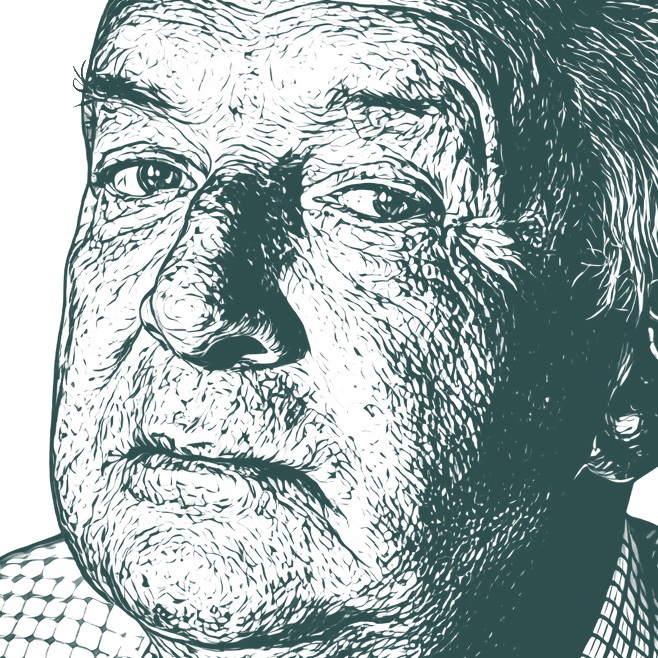
There is nothing dictators hate so much as that unassailable, eternally elusive, eternally provoking gleam. One of the main reasons why the very gall… - Vladimir Nabokov
""
There is nothing dictators hate so much as that unassailable, eternally elusive, eternally provoking gleam. One of the main reasons why the very gallant Russian poet Gumilev was put to death by Lenin's ruffians thirty odd years ago was that during the whole ordeal, in the prosecutor's dim office, in the torture house, in the winding corridors that led to the truck, in the truck that took him to the place of execution, and at that place itself, full of the shuffling feet of the clumsy and gloomy shooting squad, the poet kept smiling.
Vladimir Vladimirovich Nabokov (22 April (O.S. 10 April) 1899 – 2 July 1977) was a Russian-American writer. He wrote his first literary works in Russian, but gained international prominence as a masterly prose stylist for the novels he composed in English; his Lolita (1955) is frequently cited as one of the most important novels of the 20th century.
Biography information from
Wikiquote·
Portrait adapted from
Wikimedia Commons, Walter Mori (Mondadori Publishers) (Public domain / CC0)
Also Known As
Pen Names:
ვლადიმერ სირინი
•
Vladimir Sirin
•
Владимир Сирин
Native Name:
Владимир Владимирович Набоков
Alternative Names:
Vladimir Vladimirovich Nabokov
•
Vl. Sirin
•
Wladimir Nabokoff-Sirin
•
V. Sirin
•
Nabokov
At the hotel we had separate rooms, but in the middle of the night she came sobbing into mine, and we made it up very gently. You see, she had absolutely nowhere else to go.
Unlimited Quote Collections
Organize your favorite quotes without limits. Create themed collections for every occasion with Premium.
I remember a cartoon depicting a chimney sweep falling from the roof of a tall building and noticing on the way that a signboard had one word spelled wrong, and wondering in his headlong flight why nobody had thought of correcting it. In a sense, we all are crashing to our death from the top story of our birth to the flat stones of the churchyard and wondering with an immortal Alice in Wonderland at the patterns of the passing wall. This capacity to wonder at trifles — no matter the imminent peril — these asides of the spirit, these footnotes in the volume of life are the highest forms of consciousness, and it is in this childishly speculative state of mind, so different from common sense and its logic, that we know the world to be good.