War is the province of danger, and therefore courage above all things is the first quality of a warrior.
Courage is of two kinds: first, physical co… - Carl von Clausewitz
""
War is the province of danger, and therefore courage above all things is the first quality of a warrior.
Courage is of two kinds: first, physical courage, or courage in presence of danger to the person; and next, moral courage, or courage before responsibility, whether it be before the judgment-seat of external authority, or of the inner power, the conscience. We only speak here of the first.
Courage before danger to the person, again, is of two kinds. First, it may be indifference to danger, whether proceeding from the organism of the individual, contempt of death, or habit: in any of these cases it is to be regarded as a permanent condition.
Secondly, courage may proceed from positive motives, such as personal pride, patriotism, enthusiasm of any kind. In this case courage is not so much a normal condition as an impulse.
We may conceive that the two kinds act differently. The first kind is more certain, because it has become a second nature, never forsakes the man; the second often leads him farther. In the first there is more of firmness, in the second, of boldness. The first leaves the judgment cooler, the second raises its power at times, but often bewilders it. The two combined make up the most perfect kind of courage.
English
Collect this quote
About
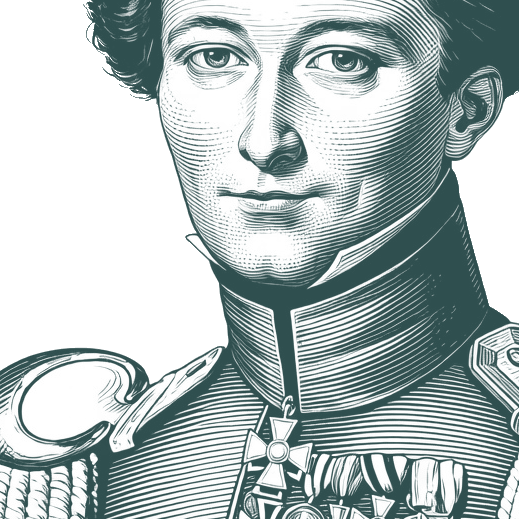
Carl von Clausewitz
Carl von Clausewitz (1 June 1780 – 16 November 1831) was a Prussian general and influential military theorist. He is most famous for his military treatise Vom Kriege, translated into English as On War.
Biography information from
Wikiquote·
Portrait adapted from
Wikimedia Commons, Wilhelm Wach (Public domain / CC0)
Also Known As
Native Name:
Carl Philipp Gottlieb von Clausewitz
Alternative Names:
Carl Philipp Gottlieb Clausewitz
•
von Clausewitz
•
Clausewitz
What we should admire is the acute fulfillment of the unspoken assumptions, the smooth harmony of the whole activity, which only become evident in the final success.
War is simply the continuation of politics by other means
PREMIUM FEATURE
Advanced Search Filters
Filter search results by source, date, and more with our premium search tools.