Forces of digestion and metabolism are at work within me that are utterly beyond my perception or control. Most of my internal organs may as well not… - Sam Harris
""
Forces of digestion and metabolism are at work within me that are utterly beyond my perception or control. Most of my internal organs may as well not exist for all I know of them directly, and yet I can be reasonably certain that I have them, arranged much as any medical textbook would suggest. The taste of the coffee, my satisfaction at its flavor, the feeling of the warm cup in my hand — while these are immediate facts with which I am acquainted, they reach back into a dark wilderness of facts that I will never come to know... Where am I, that I have such a poor view of things? And what sort of thing am I that both my outside and my inside are so obscure?
English
Collect this quote
About
Sam Harris
Samuel Benjamin Harris (born April 9, 1967) is an American author, philosopher, public intellectual, and neuroscientist, as well as the co-founder and CEO of Project Reason. He is the author of The End of Faith (2004), which won the PEN/Martha Albrand Award for First Nonfiction in 2005 and appeared on The New York Times best seller list for 33 weeks, Letter to a Christian Nation (2006), The Moral Landscape (2010), Lying (2011), Free Will (2012), and most recently Waking Up: A Guide to Spirituality Without Religion (2014).
Biography information from
Wikiquote·
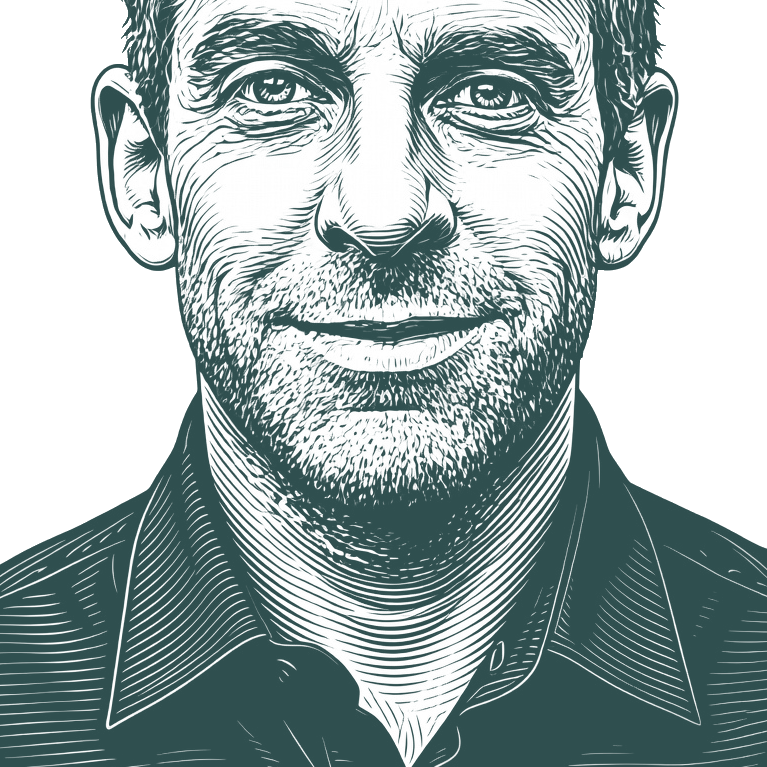
Portrait adapted from
Wikimedia Commons, Cmichel67 (Christopher Michel) (CC BY-SA)
No. Here we can see why Pascal’s wager, Kierkegaard’s leap of faith, and other epistemological ponzi schemes won’t do.
Your life doesn't get any better than your mind is: You might have wonderful friends, perfect health, a great career, and everything else you want, and you can still be miserable. The converse is also true: There are people who basically have nothing—who live in circumstances that you and I would do more or less anything to avoid—who are happier than we tend to be because of the character of their minds. Unfortunately, one glimpse of this truth is never enough. We have to be continually reminded of it.
Is it possible to be happy before anything happens, before one’s desires are gratified, in spite of life’s difficulties, in the very midst of physical pain, old age, disease, and death?