The final test of truth is ridicule. Very few dogmas have ever faced it and survived. Huxley laughed the devils out of the Gadarene swine. Not the la… - H. L. Mencken
""
The final test of truth is ridicule. Very few dogmas have ever faced it and survived. Huxley laughed the devils out of the Gadarene swine. Not the laws of the United States but the mother-in-law joke brought the Mormons to surrender. Not the horror of it but the absurdity of it killed the doctrine of infant damnation. But the razor edge of ridicule is turned by the tough hide of truth. How loudly the barber-surgeons laughed at Huxley—and how vainly! What clown ever brought down the house like Galileo? Or Columbus? Or Darwin? . . . They are laughing at Nietzsche yet . . .
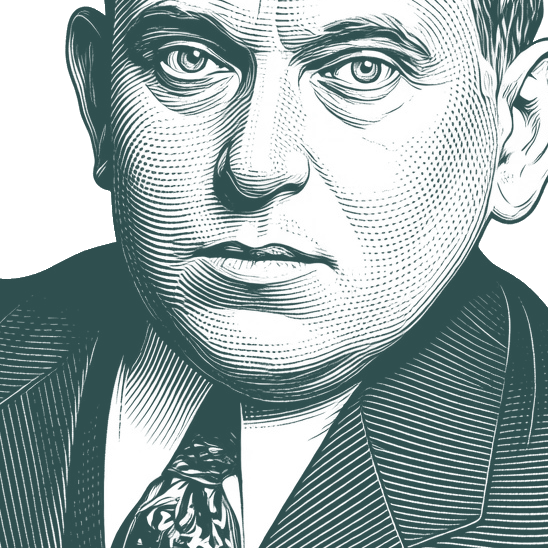
Henry Louis Mencken (12 September 1880 – 29 January 1956), known as H. L. Mencken, was a twentieth-century journalist, satirist, social critic, cynic, and freethinker, known as the "Sage of Baltimore" and the "American Nietzsche". He is often regarded as one of the most influential American writers of the early 20th century.
Portrait adapted from
Wikimedia Commons, Ben Pinchot (Public domain / CC0)
The most costly of all follies is to believe passionately in the palpably not true. It is the chief occupation of mankind.
...I have given my whole life to newspapers. I am convinced that they have abandoned their functions, and in an abject and ignominious manner, in the present war. Nine-tenths of them, and even more than nine-tenths, print the official blather without any attempt to scrutinize it... It is a disgraceful spectacle, but I do not believe that anything can be done about it. Roosevelt has taken the press into camp as certainly has he has taken the Supreme Court. It has ceased altogether to be independent and has become docilely official.
It seems to be difficult if not impossible for human beings to avoid thinking of government as mystical entity with a nature and a history all its own. It constitutes for them a creature somehow interposed between themselves and the great flow of cosmic events, and they look to it to think for them and to protect them. In democratic countries it is theoretically their agent, but there seems to be a strong tendency to convert the presumably free citizen into its agent, or at all events, its client. This exalted view of its scope, character, powers and autonomy is fundamentally false. A government at bottom is nothing more than a group of men, and as a practical matter most of them are inferior men…. Yet these nonentities, by the intellectual laziness of men in general, have come to a degree of puissance in the world that is unchallenged by that of any other group. Their fiats, however preposterous, are generally obeyed as a matter of duty, they are assumed to have a kind of wisdom that is superior to ordinary wisdom, and the lives of multitudes are willingly sacrificed in their interest.