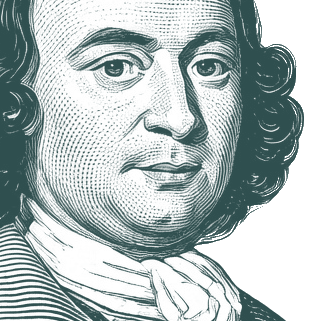
That all men are by nature equally free and independent, and have certain inherent rights, of which, when they enter into a state of society, they ca… - George Mason
""
That all men are by nature equally free and independent, and have certain inherent rights, of which, when they enter into a state of society, they cannot by any compact deprive or divest their posterity; namely, the enjoyment of life and liberty, with the means of acquiring and possessing property, and pursuing and obtaining happiness and safety.
George Mason (sometimes referred to as George Mason IV) (December 11, 1725 – October 7, 1792) was a Virginia planter, politician, and a delegate to the U.S. Constitutional Convention of 1787, one of three men who refused to sign. His writings, including substantial portions of the Fairfax Resolves of 1774, the Virginia Declaration of Rights of 1776, and his Objections to this Constitution of Government (1787) in opposition to ratification of the constitution, have been a significant influence on political thought and events. The Virginia Declaration of Rights served as a basis for the United States Bill of Rights, of which he has been deemed the father.
Biography information from
Wikiquote·
Portrait adapted from
Wikimedia Commons, After John Hesselius (Public domain / CC0)
That the people have a right to uniform government; and, therefore, that no government separate from, or independent of the government of Virginia, ought to be erected or established within the limits thereof.
Every master of slaves is born a petty tyrant. They bring the judgment of heaven on a Country. As nations can not be rewarded or punished in the next world they must be in this. By an inevitable chain of causes & effects providence punishes national sins, by national calamities.
PREMIUM FEATURE
Advanced Search Filters
Filter search results by source, date, and more with our premium search tools.