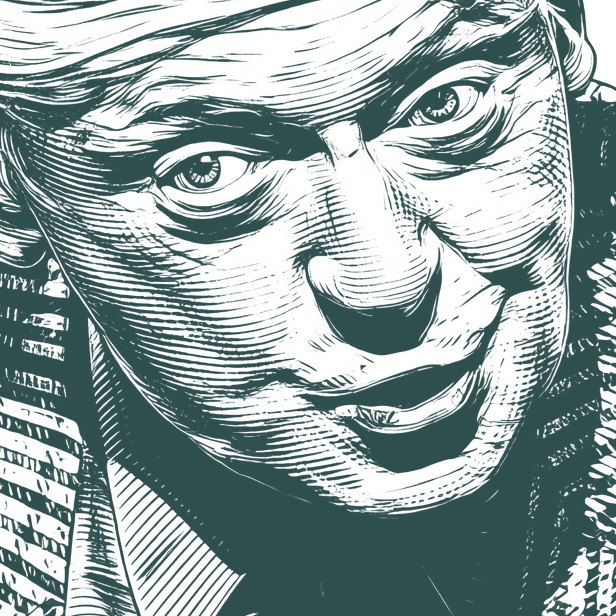
But don’t think that it’s a system or a culture or a state or a person that does the letting down. It’s our expectations that let us down. It begins … - Anthony Burgess
""
But don’t think that it’s a system or a culture or a state or a person that does the letting down. It’s our expectations that let us down. It begins in the warmth of the womb and the discovery that it’s cold outside. But it’s not the cold’s fault that it’s cold.
English
Collect this quote
About
Anthony Burgess
Anthony Burgess (25 February 1917 – 22 November 1993) was an English writer and composer whose novels include the Malayan trilogy, A Clockwork Orange, the Enderby cycle, Nothing Like The Sun, Earthly Powers and The Kingdom Of The Wicked. He also produced critical works on Joyce, Lawrence, Hemingway and Shakespeare, and studies of language and of pornography.
Biography information from
Wikiquote·
Portrait adapted from
Wikimedia Commons, Open Media Ltd. (CC BY-SA)
I remember an old proverb. It says that youth thinks itself wise just as drunk men think themselves sober. Youth is not wise! Youth knows nothing about life! Youth knows nothing about anything except for massive cliches which for the most part through the media of pop songs are just foisted on them by middle-age entrepreneurs and exploiters who should know better. When we start thinking that pop music is close to God, then we'll think pop music is aesthetically better than it is. And it's only the aesthetic value of pop music that we're really concerned. I mean the only way we can judge Wagner or Beethoven or any other composer is aesthetically. We don't regard Wagner or Beethoven nor Shakespeare or Milton as great teachers. When we start claiming for Lennon or McCartney or Maharishi or any other of these pop prophets the ability to transport us to a region where God becomes manifest then I see red. We're satisfied with our little long playing record, ten pop numbers or thereabouts a side. This is great art, we've been told this by the great pundits of our age. And in consequence why should we bother to learn? There's nothing more delightful than to be told: "You don't have to learn, my boy. There's nothing in it. Modern art? There's nothing in it." When you're told these things you sit down with a sigh of relief: "Thank God I don't have to learn, I don't have to travel, I don't have to exert myself in the slightest. I am what I am. Youth is youth. Pop is pop. There's no need to progress. There's no need to do anything. Let us sit down, smoke our marijuana (an admirable thing in itself but not the end of anything), let us listen to our records and life has become a single moment. And the single moment is eternity. We're with God. Finis!
"We," he said, not without complacency, "are different. We attest the divine paradox. We are barren only to be fertile. We proclaim the primary reality of the world of the spirit which has an infinitude of mansions for an infinitude of human souls. And you too are different. Your destiny is of the rarest kind. You will live to proclaim the love of Christ for man and man for Christ in a figure of earthly love." Preacher's rhetoric; it would have been better in Italian, which thrives on melodious meaninglessness. I said, with the same weariness as before, "My destiny is to live in a state of desire both church and state condemn and to grow sourly rich in the purveying of a debased commodity. I've just finished a novel which, when I'd read it through in typescript, made me feel sick to my stomach. And yet it's what people want -- the evocation of a past golden time when there was no Mussolini or Hitler or Franco, when gods were paid for with sovereigns, Elgar's Symphony Number One in A flat trumpeted noblimente a massive hope in the future, and the romantic love of a shopgirl and a younger son of the aristocracy portended a healthful inflection but not destruction of the inherited social pattern. Comic servants and imperious duchesses. Hansom cabs and racing at Ascot. Fascists and democrats alike will love it. My destiny is to create a kind of underliterature that lacks all whiff of the subversive." "Don't," Carlo said, "underestimate yourself."
Badness is of the self, the one, the you or me on our oddy knockies, and that self is made by old Bog or God and is his great pride and radosty. But the not-self cannot have the bad, meaning they of the government and the judges and the schools cannot allow the bad because they cannot allow the self.