It was remarked in the preceding paper, that weakness and divisions at home would invite dangers from abroad; and that nothing would tend more to sec… - Alexander Hamilton
""
It was remarked in the preceding paper, that weakness and divisions at home would invite dangers from abroad; and that nothing would tend more to secure us from them than union, strength, and good government within ourselves. This subject is copious and cannot easily be exhausted.
Alexander Hamilton (11 January 1755 or 1757 – 12 July 1804) was a Founding Father of the United States, chief staff aide to General George Washington, one of the most influential interpreters and promoters of the U.S. Constitution, the founder of the nation's financial system, the founder of the Federalist Party, the world's first voter-based political party, the Father of the United States Coast Guard, and the founder of The New York Post.
Biography information from
Wikiquote·
Portrait adapted from
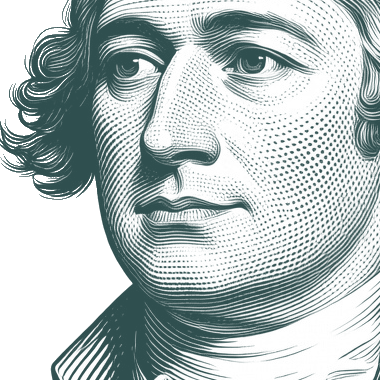
Wikimedia Commons, John Trumbull (Public domain / CC0)
Also Known As
Pen Names:
Publius
Alternative Names:
Hamilton
•
Alexander Hamilton, US Treasury secretary
•
A. Ham
nothing can contribute so much to its firmness and independence as permanency in office, this quality may therefore be justly regarded as an indispensable ingredient in its constitution, and, in a great measure, as the citadel of the public justice and the public security.
I am apprehensive, Sir, that in the warmth of my feelings, I may have uttered expressions, which were too vehement. If such has been my language, it was from the habit of using strong phrases to express my ideas; and, above all, from the interesting nature of the subject. I have ever condemned those cold, unfeeling hearts, which no object can animate. I condemn those indifferent mortals, who either never form opinions, or never make them known.
Works in ChatGPT, Claude, or Any AI
Add semantic quote search to your AI assistant via MCP. One command setup.
If there should happen to be an irreconcilable variance between the two, that which has the superior obligation and validity ought, of course, to be preferred; or in other words, the Constitution ought to be preferred to the statute; the intention of the People to the intention of their agents.