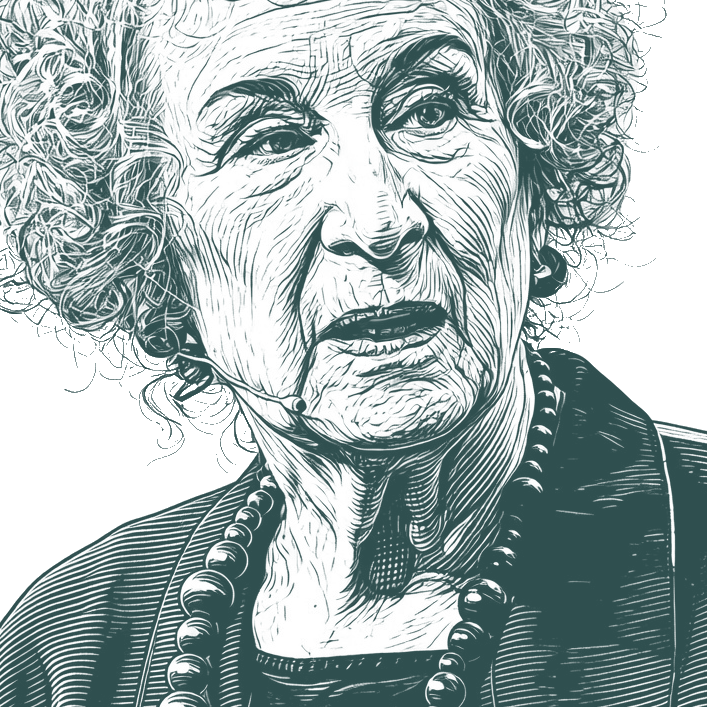
There were a lot of utopias in the nineteenth century, wonderful societies that we might possibly construct. Those went pretty much out of fashion af… - Margaret Atwood
""
There were a lot of utopias in the nineteenth century, wonderful societies that we might possibly construct. Those went pretty much out of fashion after World War I. And almost immediately one of the utopias that people were trying to construct, namely the Soviet Union, threw out a writer called Zamyatin who wrote a seminal book called We, which contains the seeds of Orwell and Huxley. Writers started doing dystopias after we saw the effects of trying to build utopias that required, unfortunately, the elimination of a lot of people before you could get to the perfect point, which never arrived. … I don’t believe in a perfect world. I don’t believe it’s achievable, and I believe the people who try to achieve it usually end up turning it into something like Cambodia or something very similar because purity tests set in. Are you ideologically pure enough to be allowed to live? Well, it turns out that very few people are, so you end up with a big powerful struggle and a mass killing scene.
English
Collect this quote
About
Margaret Atwood
Margaret Eleanor Atwood (born 18 November 1939) is a Canadian novelist, poet, and literary critic.
If you do bad things for reasons you’ve been told are good, does it make you a bad person?
They are hypocrites, they think the Church is a cage to keep God in, so he will stay locked up there and not go wandering about the earth during the week, poking his nose into their business, and looking in the depths and darkness and doubleness of their hearts, and their lack of true charity; and they believed they need only be bothered about him on Sundays when they have their best clothes on and their faces straight, and their hands washed and their gloves on, and their stories all prepared.
Go Premium
Support Quotewise while enjoying an ad-free experience and premium features.
There was old sex in the room and loneliness, and expectation, of something without a shape or name. I remember that yearning, and was never the same as the hands that were on us there and then, in the small of the back, or out back, in the parking lot, or in the television room with the sound turned down and only the pictures flickering over lifting flesh. We yearned for the future How did we learn it, that talent for insatiability?