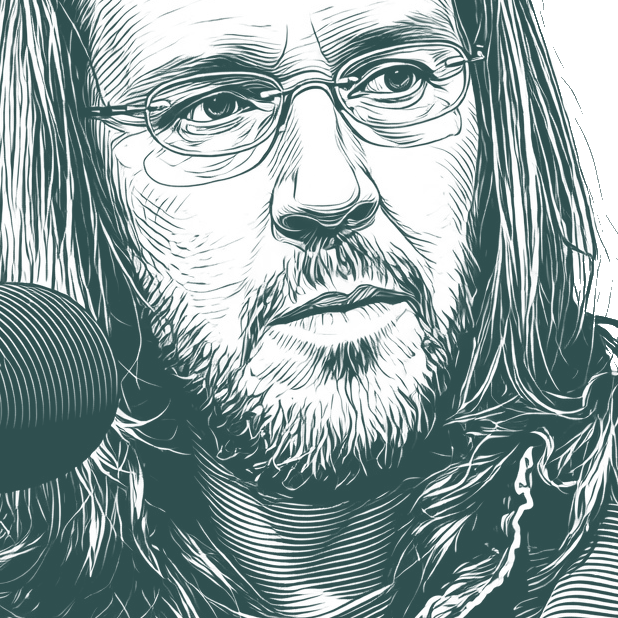
"I think there must be probably different types of suicides. I'm not one of the self-hating ones. The type of like "I'm shit and the world'd be bette… - David Foster Wallace
"I think there must be probably different types of suicides. I'm not one of the self-hating ones. The type of like "I'm shit and the world'd be better off without poor me" type that says that but also imagines what everybody'll say at their funeral. I've met types like that on wards. Poor-me-I-hate-me-punish-me-come-to-my-funeral. Then they show you a 20 X 25 glossy of their dead cat. It's all self-pity bullshit. It's bullshit. I didn't have any special grudges. I didn't fail an exam or get dumped by anybody. All these types. Hurt themselves. I didn't want to especially hurt myself. Or like punish. I don't hate myself. I just wanted out. I didn't want to play anymore is all. I wanted to just stop being conscious. I'm a whole different type. I wanted to stop feeling this way. If I could have just put myself in a really long coma I would have done that. Or given myself shock I would have done that. Instead."
David Foster Wallace (21 February 1962 – 12 September 2008) was an American novelist, essayist, and short story writer. His works include The Broom of the System (novel), Infinite Jest (novel), The Girl With Curious Hair (short story collection), Brief Interviews with Hideous Men (short story collection), A Supposedly Fun Thing I'll Never Do Again (essay collection), and the posthumously-published The Pale King (novel) and Both Flesh and Not (essay collection).
How can even the idea of rebellion against corporate culture stay meaningful when Chrysler Inc. advertises trucks by invoking “The Dodge Rebellion”? How is one to be bona fide iconoclast when Burger King sells onion rings with “Sometimes You Gotta Break the Rules”? How can an Image-Fiction writer hope to make people more critical of televisual culture by parodying television as a self-serving commercial enterprise when Pepsi and Subaru and FedEx parodies of self-serving commercials are already doing big business? It’s almost a history lesson: I’m starting to see just why turn-of-the-century Americans’ biggest fear was of anarchist and anarchy. For if anarchy actually wins, if rulelessness become the rule, then protest and change become not just impossible but incoherent. It’d be like casting a ballot for Stalin: you are voting for an end to all voting.
It is within your power to experience a crowded, loud, slow, consumer-hell-type situation as not only meaningful but sacred, on fire with the same force that lit the stars - compassion, love, the sub-surface unity of all things. Not that that mystical stuff's necessarily true: the only thing that's capital-T True is that you get to decide how you're going to try to see it. You get to consciously decide what has meaning and what doesn't. You get to decide what to worship.
PREMIUM FEATURE
Advanced Search Filters
Filter search results by source, date, and more with our premium search tools.
Whatever the social effects of talk radio or the partisan agendas of certain hosts, it is a fallacy that political talk radio is motivated by ideology. It is not. Political talk radio is a business, and it is motivated by revenue. The conservatism that dominates today's AM airwaves does so because it generates high Arbitron ratings, high ad rates, and maximum profits.