Works in ChatGPT, Claude, or Any AI
Add semantic quote search to your AI assistant via MCP. One command setup.
" "Publish and be damned.
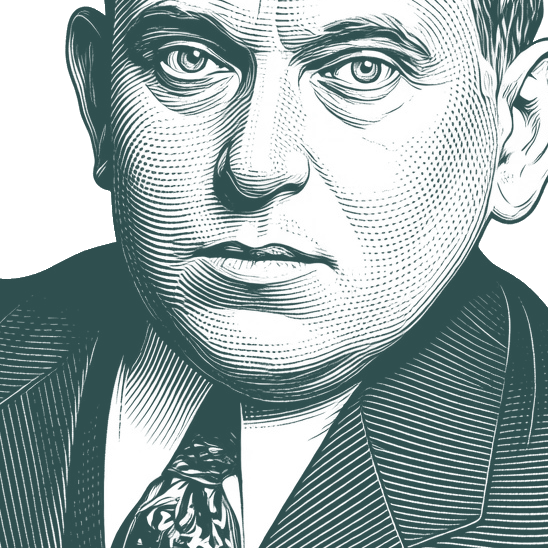
Henry Louis Mencken (12 September 1880 – 29 January 1956), known as H. L. Mencken, was a twentieth-century journalist, satirist, social critic, cynic, and freethinker, known as the "Sage of Baltimore" and the "American Nietzsche". He is often regarded as one of the most influential American writers of the early 20th century.
Add semantic quote search to your AI assistant via MCP. One command setup.
Related quotes. More quotes will automatically load as you scroll down, or you can use the load more buttons.
"I do not pretend, of course, that I have never done it; mere politeness forces one to it; there are women who sulk and grow bellicose unless one at least makes the motions of kissing them. But what I mean is that I have never found the act a tenth part as agreeable as poets, the authors of musical comedy librettos, and (on the contrary side) chaperones and the gendarmerie make it out. The physical sensation, far from being pleasant, is intensely uncomfortable — the suspension of respiration, indeed, quickly resolves itself into a feeling of suffocation — and the posture necessitated by the approximation of lips and lips is unfailingly a constrained and ungraceful one. Theoretically, a man kisses a woman perpendicularly, with their eyes, those "windows of the soul," synchronizing exactly. But actually, on account of the incompressibility of the nasal cartilages, he has to incline either his or her head to an angle of at least 60 degrees, and the result is that his right eye gazes insanely at the space between her eyebrows, while his left eye is fixed upon some vague spot behind her. An instantaneous photograph of such a maneuvre, taken at the moment of incidence, would probably turn the stomach of even the most romantic man, and force him, in sheer self-respect, to renounce kissing as he has renounced leap-frog and walking on stilts."
Add semantic quote search to your AI assistant via MCP. One command setup.
What the common man longs for in this world, before and above all his other longings, is the simplest and most ignominious sort of peace: the peace of a trusty in a well-managed penitentiary. He is willing to sacrifice everything else to it. He puts it above his dignity and he puts it above his pride. Above all, he puts it above his liberty. The fact, perhaps, explains his veneration for policemen, in all the forms they take–his belief that there is a mysterious sanctity in law, however absurd it may be in fact. A policeman is a charlatan who offers, in return for obedience, to protect him (a) from his superiors, (b) from his equals, and (c) from himself. This last service, under democracy, is commonly the most esteemed of them all. In the United States, at least theoretically, it is the only thing that keeps ice-wagon drivers, Y.M.C.A. secretaries, insurance collectors and other such human camels from smoking opium, ruining themselves in the night clubs, and going to Palm Beach with Follies girls . . . Under the pressure of fanaticism, and with the mob complacently applauding the show, democratic law tends more and more to be grounded upon the maxim that every citizen is, by nature, a traitor, a libertine, and a scoundrel. In order to dissuade him from his evil-doing the police power is extended until it surpasses anything ever heard of in the oriental monarchies of antiquity.