American writer
Cheryl Strayed (née Nyland; born September 17, 1968) is an American writer and podcast host. Her 2012 memoir Wild: From Lost to Found on the Pacific Crest Trail is an international bestseller, adapted into the 2014 Academy Award-nominated movie Wild.
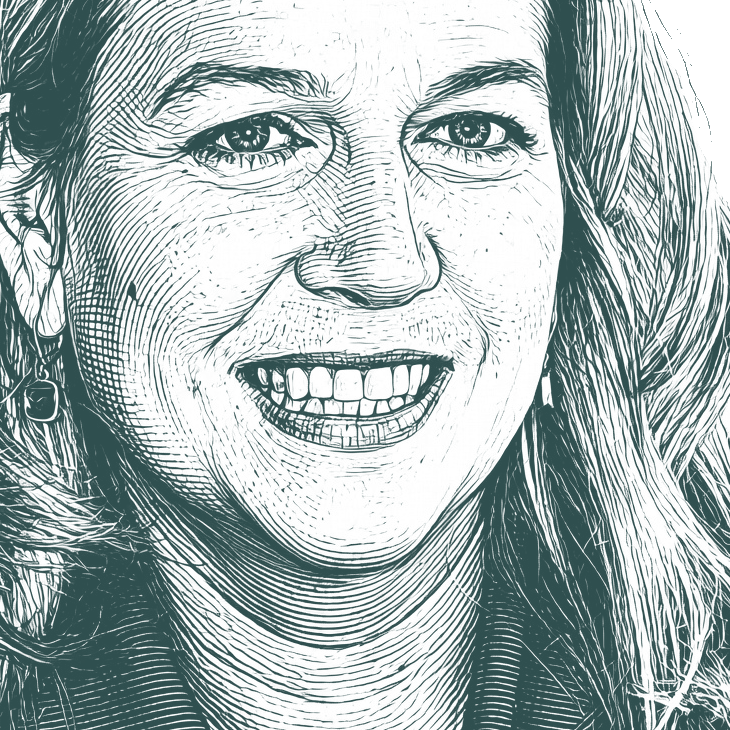
Bio from: Wikiquote (CC BY-SA 4.0) · Portrait adapted from: Wikimedia Commons, Larry D. Moore (CC BY)
If, as a culture, we don’t bear witness to grief, the burden of loss is placed entirely upon the bereaved, while the rest of us avert our eyes and wait for those in mourning to stop being sad, to let go, to move on, to cheer up. And if they don’t — if they have loved too deeply, if they do wake each morning thinking, I cannot continue to live — well, then we pathologize their pain; we call their suffering a disease.
We do not help them: we tell them that they need to get help.
Sometimes it seemed that the Pacific Crest Trail was one long mountain I was ascending. That at my journey’s end at the Columbia River, I’d reach the trail’s summit, rather than its lowest point. This feeling of ascension wasn’t only metaphorical. It literally felt as if I were almost always, impossibly, going up. At times I almost wept with the relentlessness of it, my muscles and lungs searing with the effort. It was only when I thought I couldn’t go up any longer that the trail would level off and descend.
But paging through it for the first time while actually sitting on the trail was less reassuring than I’d hoped. There were things I’d overlooked, I saw now, such as a quote on page 6 by a fellow named Charles Long, with whom the authors of The Pacific Crest Trail, Volume 1: California heartily agreed, that said, “How can a book describe the psychological factors a person must prepare for … the despair, the alienation, the anxiety and especially the pain, both physical and mental, which slices to the very heart of the hiker’s volition, which are the real things that must be planned for? No words can transmit those factors …” I sat pie-eyed, with a lurching knowledge that indeed no words could transmit those factors. They didn’t have to. I now knew exactly what they were. I’d learned about them by having hiked a little more than three miles in the desert mountains beneath a pack that resembled a Volkswagen Beetle. I read on, noting intimations that it would be wise to improve one’s physical fitness before setting out, to train specifically for the hike, perhaps. And, of course, admonishments about backpack weight. Suggestions even to refrain from carrying the entire guidebook itself because it was too heavy to carry all at once and unnecessary anyway — one could photocopy or rip out needed sections and include the necessary bit in the next resupply box. I closed the book. Why hadn’t I thought of that? Of ripping the guidebook into sections? Because I was a big fat idiot and I didn’t know what the hell I was doing, that’s why. And I was alone in the wilderness with a beast of a load to carry while finding that out. I wrapped my arms around my legs and pressed my face into the tops of my bare knees and closed my eyes, huddled into the ball of myself, the wind whipping my shoulder-length hair in a frenzy.
ucked-up people will try to tell you otherwise, but boundaries have nothing to do with whether you love someone or not. They are not judgments, punishments , or betrayals. They are a purely peaceable thing: the basic principles you identify for yourself that define the behaviors that you will tolerate from others, as well as the responses you will have to those behaviors. Boundaries teach people how to treat you and they teach you how to respect yourself.
The useless days will add up to something. The shitty waitressing jobs. The hours writing in your journal. The long meandering walks. The hours reading poetry and story collections and novels and dead people’s diaries and wondering about sex and God and whether you should shave under your arms or not. These things are your becoming.
Unlimited Quote Collections
Organize your favorite quotes without limits. Create themed collections for every occasion with Premium.
Uncertain as I was as I pushed forward, I felt right in my pushing, as if the effort itself meant something. That perhaps being amidst the undesecrated beauty of the wilderness meant I too could be undesecrated, regardless of what I’d lost or what had been taken from me, regardless of the regrettable things I’d done to others or myself or the regrettable things that had been done to me. Of all the things I’d been skeptical about, I didn’t feel skeptical about this: the wilderness had a clarity that included me.