Portuguese poet, writer, and philosopher (1888–1935); creator of the heteronymic system including Alberto Caeiro, Ricardo Reis, Álvaro de Campos, and Bernardo Soares
Fernando Pessoa (13 June 1888 – 30 November 1935) was a Portuguese poet and writer, most of whose work was published posthumously. He wrote frequently under heteronyms, alter egos with developed personalities, biographies, jobs, habits, attitudes, addresses, etc., who sometimes quoted and interacted with each other and other people.
Bio from: Wikiquote (CC BY-SA 4.0) · Portrait adapted from: Wikimedia Commons, S.A. e Maria José de Lencastre (Public domain / CC0)
From Wikidata (CC0)
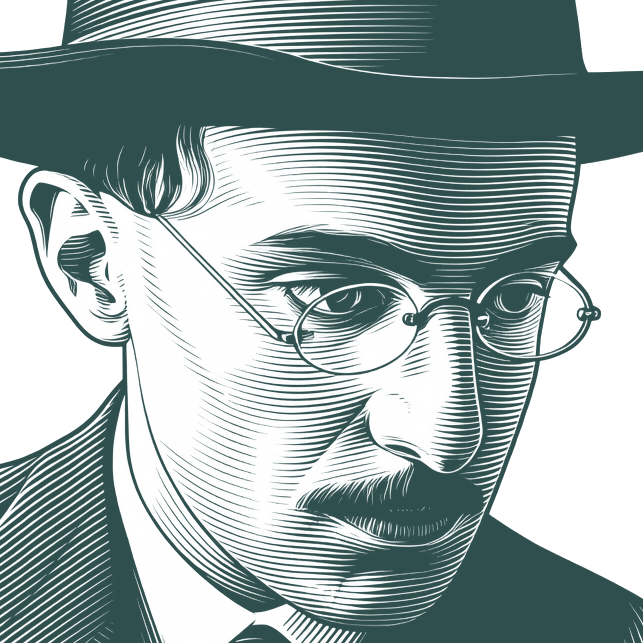

Knowing how easily even the smallest things torture me, I deliberately avoid contact with them. A cloud passing in front of the sun is enough to make me suffer, how then should I not suffer in the darkness of the endlessly overcast sky of my own life?
My isolation is not a search for happiness, which I do not have the heart to win, nor for peace, which one finds only when it will never more be lost; what I seek is sleep, extinction, a small surrender.
Original: Jaz aqui, na pequena praia extrema, o Capitão do Fim.
Original: A ladeira leva ao moinho, mas o esforço não leva a nada.
There are diseases worse, yes, than diseases,
Aches that don't ache even in one's soul
And yet, that are more aching than the others.
There are dreamed anguishes that are more real
Than the ones life brings us, there are sensations
Felt only by imagining
Which are more ours than our life is.
There's so often a thing which, not existing,
Does exist, exists lingeringly
And lingeringly is ours and us.....
Above the cloudy green of the broad river
The white circumflexes of the gulls.....
Above the soul the useless fluttering-
What never was, nor could be, and is everything.
Give me some more wine, because life is nothing.
Enhance Your Quote Experience
Enjoy ad-free browsing, unlimited collections, and advanced search features with Premium.
Whoever lives like me doesn't die: he terminates, wilts, devegetates. The place where he was remains without him being there; the street where he walked remains without him being seen on it; the house where he lived is inhabited by not-him. That's all, and we call it nothing; but not even this tragedy of negation can be staged to applause, for we don't even know for sure if it's nothing, we, these vegetable manifestations of both truth and life, dust on both the outside and the inside of the panes, grandchildren of Destiny and stepchildren of God, who married Eternal Night when she was widowed by the Chaos that fathered us.