Portuguese poet, writer, and philosopher (1888–1935); creator of the heteronymic system including Alberto Caeiro, Ricardo Reis, Álvaro de Campos, and Bernardo Soares
Fernando Pessoa (13 June 1888 – 30 November 1935) was a Portuguese poet and writer, most of whose work was published posthumously. He wrote frequently under heteronyms, alter egos with developed personalities, biographies, jobs, habits, attitudes, addresses, etc., who sometimes quoted and interacted with each other and other people.
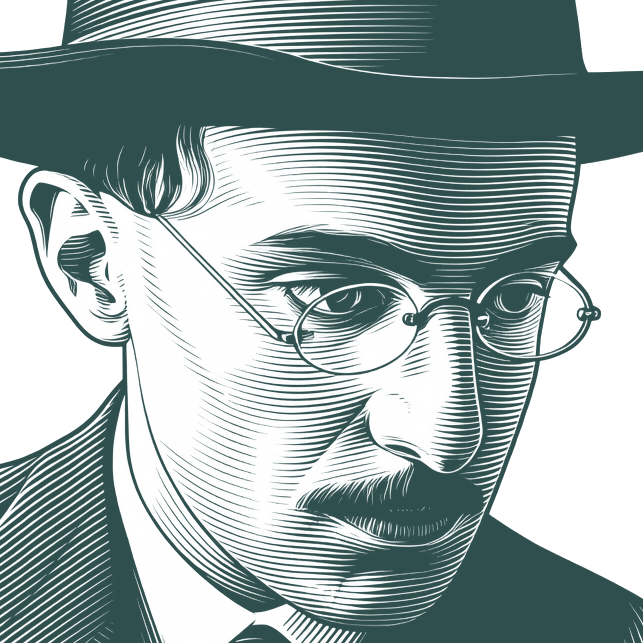
Bio from: Wikiquote (CC BY-SA 4.0) · Portrait adapted from: Wikimedia Commons, S.A. e Maria José de Lencastre (Public domain / CC0)
From Wikidata (CC0)

And leaning on the windowsill to enjoy the day, gazing at the variegated mass of the whole city, just one thought fills my soul: that I profoundly wish to die, to cease, to see no more light shining on this city or any city, to think no more, to feel no more, to leave behind the march of time and the sun like a piece of wrapping paper, to remove like a heavy suit – next to the big bed – the involuntary effort of being.
Original: Escrever é esquecer. A literatura é a maneira mais agradável de ignorar a vida.
I read and am liberated. I acquire objectivity. I cease being myself and so scattered. And what I read, instead of being like a nearly invisible suit that sometimes oppresses me, is the external world's tremendous and remarkable clarity, the sun that sees everyone, the moon that splotches the still earth with shadows, the wide expanses that end in the sea, the blackly solid trees whose tops greenly wave, the steady peace of ponds on farms, the terraced slopes with their paths overgrown by grape-vines.
Os sentimentos que mais doem, as emoções que mais pungem, são os que são absurdos – a ânsia de coisas impossíveis, precisamente porque são impossíveis, a saudade do que nunca houve, o desejo do que poderia ter sido, a mágoa de não ser outro, a insatisfação da existência do mundo. Todos estes meios tons da consciencia da alma criam em nós uma paisagem dolorida, um eterno sol-pôr do que somos.