Kids are not stupid. They are among the sharpest, cleverest, most eagle-eyed creatures on God's Earth, and very little escapes their notice. You may not have observed that your neighbor is still using his snow tires in mid-July, but every four-year-old on the block has, and kids pay the same attention to detail when they go to the movies. They don't miss a thing, and they have an instinctive contempt for shoddy and shabby work. I make this observation because nine out of ten children's movies are stupid, witless, and display contempt for their audiences, and that's why kids hate them. Is that all parents want from kids' movies? That they not have anything bad in them? Shouldn't they have something good in them — some life, imagination, fantasy, inventiveness, something to tickle the imagination? If a movie isn't going to do your kids any good, why let them watch it? Just to kill a Saturday afternoon? That shows a subtle kind of contempt for a child's mind, I think. All of this is preface to a simple statement: Willy Wonka and the Chocolate Factory is probably the best film of its sort since "The Wizard of Oz." It is everything that family movies usually claim to be, but aren't: Delightful, funny, scary, exciting, and, most of all, a genuine work of imagination. Willy Wonka is such a surely and wonderfully spun fantasy that it works on all kinds of minds, and it is fascinating because, like all classic fantasy, it is fascinated with itself.
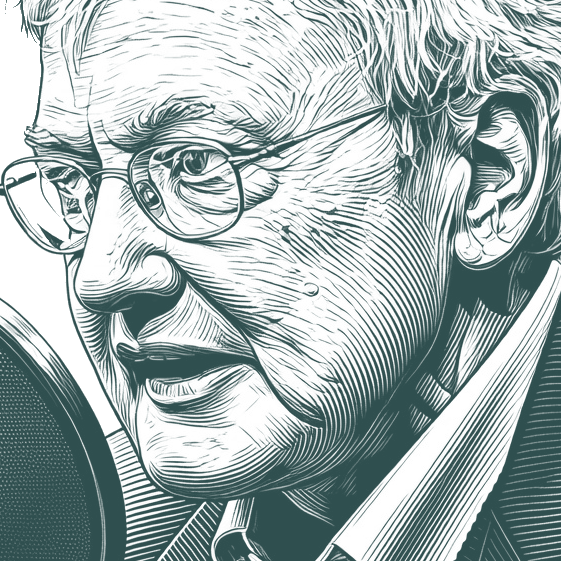
American film critic and author (1942–2013)
Roger Joseph Ebert (18 June 1942 – 4 April 2013) was an American film critic, film historian, journalist, essayist, screenwriter, and author. He was a film critic for the Chicago Sun-Times from 1967 until his death in 2013. He was the first film critic to win a Pulitzer Prize for Criticism.
Bio from: Wikiquote (CC BY-SA 4.0) · Portrait adapted from: Wikimedia Commons, Sound Opinions (CC BY-SA)
Pen Names:
Reinhold Timme
•
R. Hyde
Alternative Names:
Roger Joseph Ebert
From Wikidata (CC0)

It is not too soon for "United 93," because it is not a film that knows any time has passed since 9/11. The entire story, every detail, is told in the present tense. We know what they know when they know it, and nothing else. Nothing about Al Qaeda, nothing about Osama bin Laden, nothing about Afghanistan or Iraq, only events as they unfold. This is a masterful and heartbreaking film, and it does honor to the memory of the victims.
Terrence Malick's The Tree of Life is a film of vast ambition and deep humility, attempting no less than to encompass all of existence and view it through the prism of a few infinitesimal lives. The only other film I've seen with this boldness of vision is Kubrick's 2001: A Space Odyssey, and it lacked Malick's fierce evocation of human feeling. … I don't know when a film has connected more immediately with my own personal experience. In uncanny ways, the central events of The Tree of Life reflect a time and place I lived in, and the boys in it are me. If I set out to make an autobiographical film, and if I had Malick's gift, it would look so much like this. … There is a father who maintains discipline and a mother who exudes forgiveness, and long summer days of play and idleness and urgent unsaid questions about the meaning of things. … The film's portrait of everyday life, inspired by Malick's memories of his hometown of Waco, Texas, is bounded by two immensities, one of space and time, and the other of spirituality. The Tree of Life has awe-inspiring visuals suggesting the birth and expansion of the universe, the appearance of life on a microscopic level and the evolution of species. This process leads to the present moment, and to all of us. We were created in the Big Bang and over untold millions of years, molecules formed themselves into, well, you and me. And what comes after? In whispered words near the beginning, "nature" and "grace" are heard. … The film's coda provides a vision of an afterlife, a desolate landscape on which quiet people solemnly recognize and greet one another, and all is understood in the fullness of time.
We are connected with some people and never meet others, but it could easily have happened otherwise. Looking back over a lifetime, we describe what happened as if it had a plan. To fully understand how accidental and random life is — how vast the odds are against any single event taking place — would be humbling. … This is the kind of film that makes you feel intensely alive while you're watching it, and sends you out into the streets afterwards eager to talk deeply and urgently, to the person you are with. Whoever that happens to be.
Here is a lovely film about two high school seniors who look, speak and feel like real 18-year-old middle-American human beings. Do you have any idea how rare that is? They aren't crippled by irony. They aren't speeded up into cartoons. Their sex lives aren't insulted by scenes that treat them cheaply. The story requires them to make love, but it doesn't insist we see her tits.
Sometimes when you've read the novel, it gets in the way of the images on the screen. You keep remembering how you imagined things. That didn't happen with me during Sophie's Choice, because the movie is so perfectly cast and well-imagined that it just takes over and happens to you. It's quite an experience. … The movie becomes an act of discovery, as the naive young American, his mind filled with notions of love, death, and honor, becomes the friend of a woman who has seen so much hate, death, and dishonor that the only way she can continue is by blotting out the past, and drinking and loving her way into temporary oblivion. … Sophie's Choice is a fine, absorbing, wonderfully acted, heartbreaking movie. It is about three people who are faced with a series of choices, some frivolous, some tragic. As they flounder in the bewilderment of being human in an age of madness, they become our friends, and we love them.
Here is how [life] happens. We find something we want to do, if we are lucky, or something we need to do, if we are like most people. We use it as a way to obtain food, shelter, clothing, mates, comfort, a first folio of Shakespeare, model airplanes, American Girl dolls, a handful of rice, sex, solitude, a trip to Venice, Nikes, drinking water, plastic surgery, child care, dogs, medicine, education, cars, spiritual solace -- whatever we think we need. To do this, we enact the role we call "me," trying to brand ourselves as a person who can and should obtain these things.<p>In the process, we place the people in our lives into compartments and define how they should behave to our advantage. Because we cannot force them to follow our desires, we deal with projections of them created in our minds. But they will be contrary and have wills of their own. Eventually new projections of us are dealing with new projections of them. Sometimes versions of ourselves disagree. We succumb to temptation — but, oh, father, what else was I gonna do? I feel like hell. I repent. I'll do it again... This has not been a conventional review. There is no need to name the characters, name the actors, assign adjectives to their acting. Look at who is in this cast. You know what I think of them. This film must not have seemed strange to them. It's what they do all day, especially waiting around for the director to make up his mind.
In the twilight of the 20th century, here is a comedy to reassure us that there is hope — that the world we see around us represents progress, not decay. Pleasantville, which is one of the year's best and most original films, sneaks up on us. It begins by kidding those old black-and-white sitcoms like "Father Knows Best," it continues by pretending to be a sitcom itself, and it ends as a social commentary of surprising power. … The film observes that sometimes pleasant people are pleasant simply because they have never, ever been challenged. That it's scary and dangerous to learn new ways. The movie is like the defeat of the body snatchers: The people in color are like former pod people now freed to move on into the future. We observe that nothing creates fascists like the threat of freedom. Pleasantville is the kind of parable that encourages us to re-evaluate the good old days and take a fresh look at the new world we so easily dismiss as decadent. Yes, we have more problems. But also more solutions, more opportunities and more freedom. I grew up in the '50s. It was a lot more like the world of Pleasantville than you might imagine. Yes, my house had a picket fence, and dinner was always on the table at a quarter to six, but things were wrong that I didn't even know the words for.
This is a painful movie to watch. But it is also exhilarating, as all good movies are, because we are watching the director and actors venturing beyond any conventional idea of what a modern movie can be about. Here there is no plot, no characters to identify with, no hope. But there is care: The filmmakers care enough about these people to observe them very closely, to note how they look and sound and what they feel.
PREMIUM FEATURE
Advanced Search Filters
Filter search results by source, date, and more with our premium search tools.
To see strong acting like this is exhilarating. In a time of flashy directors who slice and dice their films in a dizzy editing rhythm, it is important to remember that films can look and listen and attentively sympathize with their characters. Directors grow great by subtracting, not adding, and Eastwood does nothing for show, everything for effect.
The ability of so many people to live comfortably with the idea of capital punishment is perhaps a clue to how so many Europeans were able to live with the idea of the Holocaust: Once you accept the notion that the state has the right to kill someone and the right to define what is a capital crime, aren't you halfway there?
What Charlize Theron achieves in Patty Jenkins' Monster isn't a performance but an embodiment. With courage, art and charity, she empathizes with Aileen Wuornos, a damaged woman who committed seven murders. She does not excuse the murders. She simply asks that we witness the woman's final desperate attempt to be a better person than her fate intended.
American movies are in the midst of a transition period. Some directors place their trust in technology. Spielberg, who is a master of technology, trusts only story and character, and then uses everything else as a workman uses his tools. He makes Minority Report with the new technology; other directors seem to be trying to make their movies from it. This film is such a virtuoso high-wire act, daring so much, achieving it with such grace and skill. Minority Report reminds us why we go to the movies in the first place.