Men are all right for friends, but as soon as you marry them they turn into cranky old fathers, even the wild ones. They begin to tell you what’s sen… - Willa Cather

" "

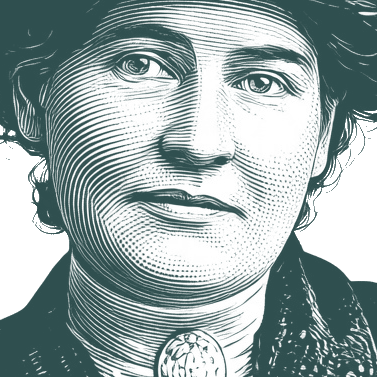
Men are all right for friends, but as soon as you marry them they turn into cranky old fathers, even the wild ones. They begin to tell you what’s sensible and what’s foolish, and want you to stick at home all the time. I prefer to be foolish when I feel like it, and be accountable to nobody.
English
Collect this quote

About Willa Cather

Willa Sibert Cather (7 December 1873 – 24 April 1947) is among the most eminent American authors, known for her depictions of US life in her novels.

Biography information from Wikiquote

Also Known As

Alternative Names: Willa Sibert Cather Wilella Sibert “Willa” Cather
PREMIUM FEATURE
Advanced Search Filters

Filter search results by source, date, and more with our premium search tools.

Related quotes. More quotes will automatically load as you scroll down, or you can use the load more buttons.

Shorter versions of this quote

Additional quotes by Willa Cather

He had never learned to live without delight. And he would have to learn to, just as, in a Prohibition country, he supposed he would have to learn to live without sherry. Theoretically he knew that life is possible, maybe even pleasant, without joy, without passionate griefs. But it had never occurred to him that he might have to live like that.

Try QuoteGPT

Chat naturally about what you need. Each answer links back to real quotes with citations.

"...she sat down at the piano and began to run over the first act of the Walkure, the last of his roles they had practiced together; playing listlessly and absently at first, but with gradually increasing seriousness. Perhaps it was the still heat of the summer night, perhaps it was the heavy odors from the garden that came in through the open windows; but as she played there grew and grew the feeling that he was there, beside her, standing in his accustomed place. In the duet at the end of the first act she heard him clearly: "Thou art the Spring for which I sighed in Winter's cold embraces." Once as he sang it, he had put his arm about her, his one hand under her heart, while with the other he took her right from the keyboard, holding her as he always held Sieglinde when he drew her toward the window. She had been wonderfully the mistress of herself at the time; neither repellent nor acquiescent. She remembered that she had rather exulted, then, in her self-control — which he had seemed to take for granted, though there was perhaps the whisper of a question from the hand under her heart. "Thou art the Spring for which I sighed in Winter's cold embraces." Caroline lifted her hands quickly from the keyboard, and she bowed her head in them, sobbing."

Loading...