The nineteenth century moved fast and furious, so that one who moved in it felt sometimes giddy, watching it spin; but the eleventh moved faster and … - Henry Adams
""
The nineteenth century moved fast and furious, so that one who moved in it felt sometimes giddy, watching it spin; but the eleventh moved faster and more furiously still. The Norman conquest of England was an immense effort, and its consequences were far-reaching, but the first crusade was altogether the most interesting event in European history. Never has the western world shown anything like the energy and unity with which she then flung herself on the East, and for the moment made the East recoil. Barring her family quarrels, Europe was a unity then, in thought, will and object. Christianity was the unit.
English
Collect this quote
About
Henry Adams
Henry Brooks Adams (16 February 1838 – 27 March 1918) was a U.S. historian, journalist, novelist and educator. He was the great-grandson of John Adams, grandson of John Quincy Adams and son of Charles Francis Adams, Sr.
Biography information from
Wikiquote·
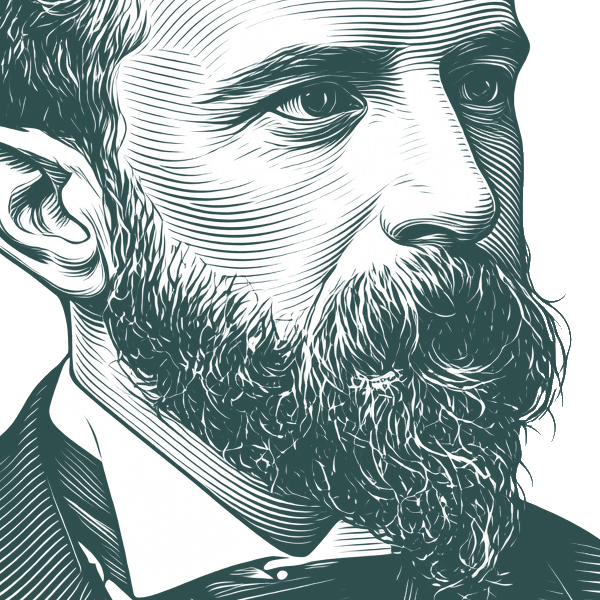
Portrait adapted from
Wikimedia Commons, William Notman (Public domain / CC0)
He was a banker, and towards bankers Adams felt the narrow prejudice which the serf feels to his overseer; for he knew he must obey, and he knew that the helpless showed only their helplessness when they tempered obedience by mockery. The world, after 1865, became a bankers' world.
...what struck boys most was their type. Senators were a species
PREMIUM FEATURE
Advanced Search Filters
Filter search results by source, date, and more with our premium search tools.
The wood-carving, the glass windows, the sculpture, inside and out, were done mostly in workshops on the spot, but besides these fixed objects, precious works of the highest perfection filled the church treasuries. Their money-value was great then; it is greater now. No world's-fair is likely to do better today. After five hundred years of spoliation, these objects fill museums still, and are bought with avidity at every auction [....] Royalty and feudality spent their money rather on arms and clothes. The Church alone was universal patron, and the Virgin was the dictator of taste.