Doing nothing is not the absence of a policy; it is, in fact, the adoption of one. "Neutrality" favors the side with the biggest arsenal. "Noninterve… - Christopher Hitchens
""
Doing nothing is not the absence of a policy; it is, in fact, the adoption of one. "Neutrality" favors the side with the biggest arsenal. "Nonintervention" is a form of interference. If you will the end—and President Barack Obama has finally said that Qaddafi should indeed go—then to that extent you will the means...The immediate task is therefore to limit the amount of damage Qaddafi can do and sharply minimize the number of people he can murder. Whatever the character of the successor system turns out to be, it can hardly be worsened if we show it positive signs of friendship and solidarity...I am sure I am not alone in feeling rather queasy about being forced to watch the fires in Tripoli and Benghazi as if I were an impotent spectator. Indifference of this kind to the lives of others can have a coarsening effect. It can lower one's threshold of sympathy. If protracted unduly, it might even become brutalizing.
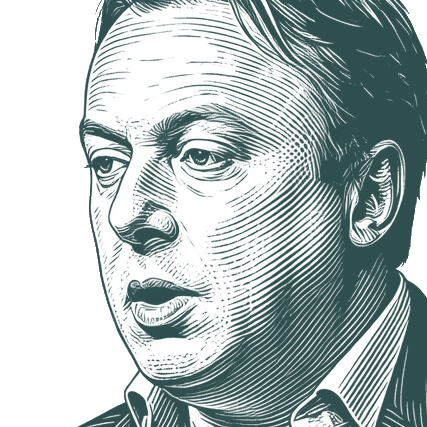
Christopher Eric Hitchens (13 April 1949 – 15 December 2011) was an-English-American journalist and writer. He contributed to the New Statesman, The Nation, The Atlantic, London Review of Books, The Times Literary Supplement, Slate, and Vanity Fair. Hitchens was the author, co-author, editor or co-editor of over 30 books, including five collections of essays, on a range of subjects, including politics, literature, and religion. A staple of talk shows and lecture circuits, his confrontational style of debate made him both a lauded and controversial figure and public intellectual.
As he defended the book one evening in the early 1980s at the Carnegie Endowment in New York, I knew that some of what he said was true enough, just as some of it was arguably less so. (Edward incautiously dismissed 'speculations about the latest conspiracy to blow up buildings or sabotage commercial airliners' as the feverish product of 'highly exaggerated stereotypes.') Covering Islam took as its point of departure the Iranian revolution, which by then had been fully counter-revolutionized by the forces of the Ayatollah. Yes, it was true that the Western press — which was one half of the pun about 'covering' — had been naïve if not worse about the Pahlavi regime. Yes, it was true that few Middle East 'analysts' had had any concept of the latent power of Shi'ism to create mass mobilization. Yes, it was true that almost every stage of the Iranian drama had come as a complete surprise to the media. But wasn't it also the case that Iranian society was now disappearing into a void of retrogressive piety that had levied war against Iranian Kurdistan and used medieval weaponry such as stoning and amputation against its internal critics, or even against those like unveiled women whose very existence constituted an offense?
Religious ideas, supposedly private matters between man and god, are in practice always political ideas
Unlimited Quote Collections
Organize your favorite quotes without limits. Create themed collections for every occasion with Premium.
The metaphor of the watch was very much used by the deists. And of course, watches run down, and break down, and it was believed by many of them that if an intelligence had begun the universe, begun the process, he'd took no further interest in it - didn't intervene in human affairs, didn't mind who won the war, didn't mind which country was the leading one, watched with relative—well, or didn't watch—with indifference, plague, famine, war and so forth. That's a very hard position to oppose, by the way. It's impossible, actually, to disprove - one can only the evidence for it isn't quite strong enough to be persuasive. To be a theist, to be a member of a monotheistic religion, that believes that truth has been revealed, that god has intervened in human affairs, that he has a plan for us - each of as individually and as a species, and that it shows - is a very much more difficult undertaking. I'm gonna show why I think it's more or less impossible.