How should we like it were stars to burn
With a passion for us we could not return?
If equal affection cannot be,
Let the more loving one be me. - W. H. Auden
""
How should we like it were stars to burn With a passion for us we could not return? If equal affection cannot be, Let the more loving one be me.
English
Collect this quote
About
W. H. Auden
Wystan Hugh Auden (21 February 1907 – 29 September 1973) was an Anglo-American poet known for his vast poetic work in many forms on many themes.
Biography information from
Wikiquote·
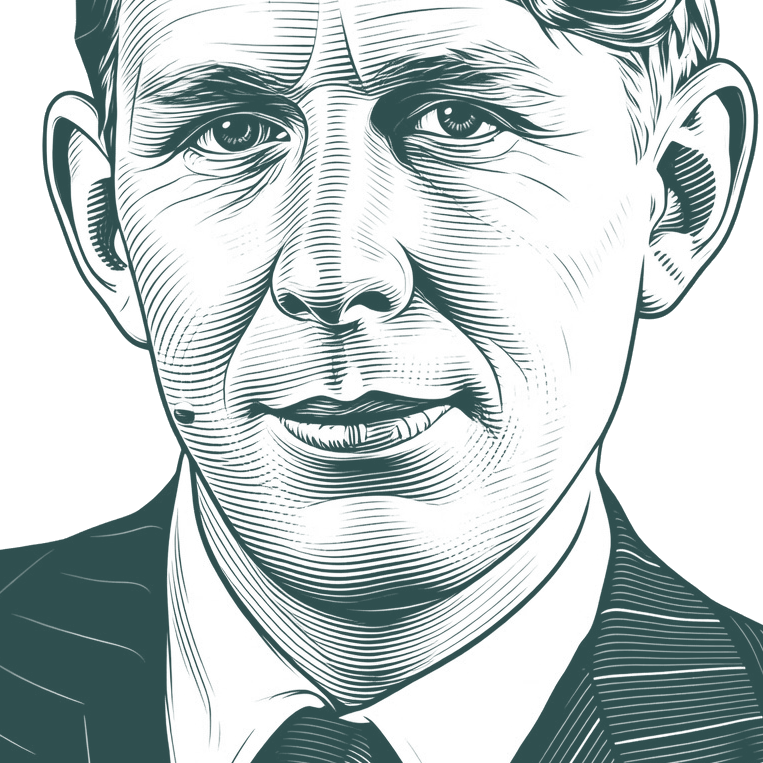
Portrait adapted from
Wikimedia Commons, Carl Van Vechten (Public domain / CC0)
Also Known As
Native Name:
Wystan Hugh Auden
Alternative Names:
Wystan Auden
•
Wystan H Auden
•
W. H. Wystan Hugh Auden
"But if a stranger in the train asks me my occupation, I never answer "writer" for fear that he may go on to ask me what I write, and to answer "poetry" would embarrass us both, for we both know that nobody can earn a living simply by writing poetry."
For a desert island, one would choose a good dictionary rather than the greatest literary masterpiece imaginable, for, in relation to its readers, a dictionary is absolutely passive and may legitimately be read in an infinite number of ways.
He who despises himself, nevertheless esteems himself as a self-despiser. (Nietzsche.) A vain person is always vain about something. He overestimates the importance of some quality or exaggerates the degree to which he possesses it, but the quality has some real importance and he does possess it to some degree. The fantasy of overestimation or exaggeration makes the vain person comic, but the fact that he cannot be vain about nothing makes his vanity a venial sin, because it is always open to correction by appeal to objective fact.
A proud person, on the other hand, is not proud of anything, he is proud, he exists proudly. Pride is neither comic nor venial, but the most mortal of all sins because, lacking any basis in concrete particulars, it is both incorrigible and absolute: one cannot be more or less proud, only proud or humble.
Thus, if a painter tries to portray the Seven Deadly Sins, his experience will furnish him readily enough with images symbolic of Gluttony, Lust, Sloth, Anger, Avarice, and Envy, for all these are qualities of a person’s relations to others and the world, but no experience can provide an image of Pride, for the relation it qualifies is the subjective relation of a person to himself. In the seventh frame, therefore, the painter can only place, in lieu of a canvas, a mirror.