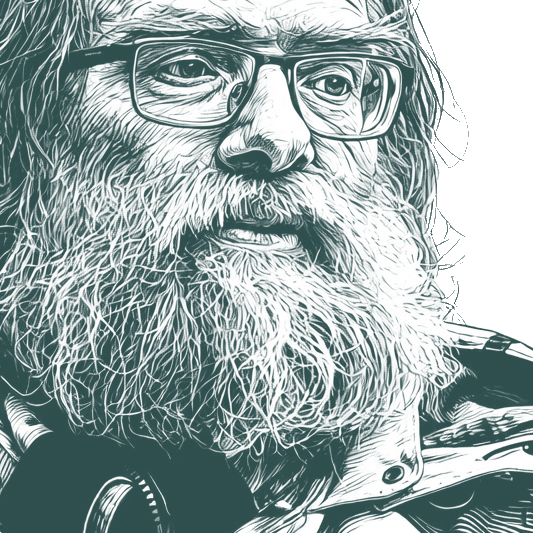
To say Mahmud patronised Alberuni is a bit of a stretch - for Alberuni was a captive from one of Mahmud’s western campaigns and, while he travelled i… - Koenraad Elst
""
To say Mahmud patronised Alberuni is a bit of a stretch - for Alberuni was a captive from one of Mahmud’s western campaigns and, while he travelled in Mahmud’s train, he enjoyed no special privileges. (his bitterness towards Mahmud is quite explicit in his Kitab-al-Hind.)
English
Collect this quote
About
Koenraad Elst
Koenraad Elst (born 7 August 1959) is a Flemish right wing Hindutva author, known primarily for his support of the Out of India theory and the Hindutva movement. Scholars have accused him of harboring Islamophobia.
For fourteen years, the secularists had worked hard to keep the lid on the Ayodhya evidence and they didn’t want some puny radar scanner or muddy-handed archaeologist to bring the facts to light and thereby expose their mendaciousness.
It seems that white people on average are quite silly, for most of us have lapped up the version of Indian history propagated by India's "eminent historians" whose eminence results from their toeing the hegemonic party-line rather than from a respect for the data in the primary sources. (305)
Finally, there is one more kind of India-watcher or India-fan in the West, with a typical and remarkable attitude to the Ayodhya affair: the"seekers". Some people staying in India for spiritual things, and who were told that I was writing about this Ayodhya affair, immediately came out with their superior scorn for such unspiritual quarrels: "What are those Kar Sevaks going to Ayodhya for? To lay the second brick?" What these people should realize, is that the society which has allowed ashrams to flourish, has only survived because it also had a martial component. Why are they not going to Afghanistan for yoga? because Hinduism in Afghanistan got militarily defeated and annihilated. Because Islam, which in their own woolly world-view is just as true as any other religion, has weeded out the kind of Pagan practices that they come to India for. If there is a part of the world left where the gurus can continue their traditions, it is because Hindus have fought. It is a non-violent part of the same martial tradition, that today Hindus are asserting themselves in Ayodhya.