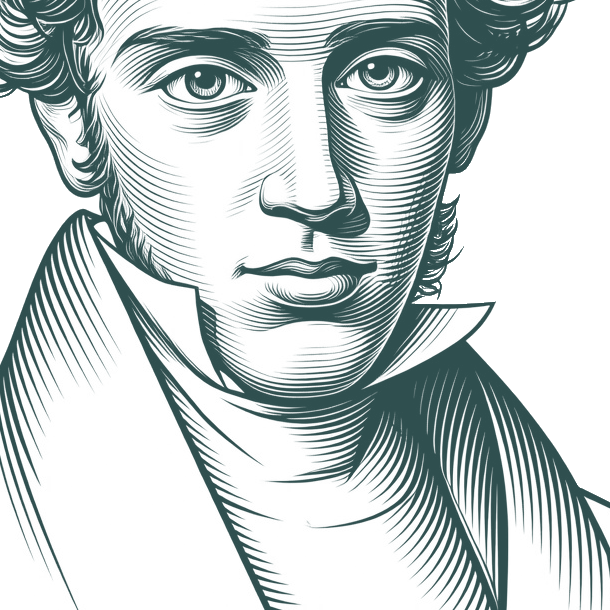
I have never been joyful, and yet it has always seemed as if joy were my constant companion, as if the buoyant jinn of joy danced around me, invisibl… - Søren Kierkegaard
""
I have never been joyful, and yet it has always seemed as if joy were my constant companion, as if the buoyant jinn of joy danced around me, invisible to others but not to me, whose eyes shone with delight. Then when I walk past people, happy-go-lucky as a god, and they envy me because of my good fortune, I laugh, for I despise people, and I take my revenge. I have never wished to do anyone an injustice, but I have always made it appear as if anyone who came close to me would be wronged and injured. Then when I hear others praised for their faithfulness, their integrity, I laugh, for I despise people, and I take my revenge. My heart has never been hardened toward anyone, but I have always made it appear, especially when I was touched most deeply, as if my heart were closed and alien to every feeling. Then when I hear others lauded for their good hearts, see them loved for their deep, rich feelings, then I laugh, for I despise people and take my revenge. When I see myself cursed, abhorred, hated for my coldness and heartlessness, then I laugh, then my rage is satisfied. The point is that if the good people could make me be actually in the wrong, make me actually do an injustice-well, then I would have lost.
Søren Aabye Kierkegaard (5 May 1813 – 11 November 1855) was a Danish Christian philosopher and theologian, considered to be a founder of Existentialist thought and Absurdist traditions. He wrote critical texts on organized religion, Christendom, morality, ethics, psychology and philosophy of religion, displaying a fondness for metaphor, irony and parables.
Biography information from
Wikiquote·
Portrait adapted from
Wikimedia Commons, La Biblioteca Real de Dinamarca (Public domain / CC0)
Also Known As
Pen Names:
Victor Eremita
•
A
•
Judge William
•
Johannes de silentio
•
Constantine Constantius
•
Young Man
•
Vigilius Haufniensis
•
Nicolaus Notabene
•
Hilarius Bookbinder
•
Johannes Climacus
•
Inter et Inter
•
H.H.
•
Anti-Climacus
•
B
•
Johannes de Silentio
•
Constantin Constantius
•
P. CH. Kierkegaard
Native Name:
Søren Aabye Kierkegaard
Alternative Names:
Kierkegaard
•
Climacus
•
Sören Aaby Kierkegaard
Philosophy cannot and should not give us an account of faith, but should understand itself and know just what it has indeed to offer, without taking anything away, least of all cheating people out of something by making them think it is nothing.
In relationship to God one can not involve himself to a certain degree. God is precisely the contradiction to all that is 'to a certain degree'.
Try QuoteGPT
Chat naturally about what you need. Each answer links back to real quotes with citations.
This, then, is the ultimate paradox of thought: to want to discover something that thought itself cannot think.