I am now about to take leave of the Emerald Isle, for Glasgow, Scotland. I have been here a little more than four months. Up to this time, I have giv… - Frederick Douglass
""
I am now about to take leave of the Emerald Isle, for Glasgow, Scotland. I have been here a little more than four months. Up to this time, I have given no direct expression of the views, feelings and opinions which I have formed, respecting the character and condition of the people in this land. I have refrained thus purposely. I wish to speak advisedly, and in order to do this, I have waited till I trust experience has brought my opinions to an intelligent maturity. I have been thus careful, not because I think what I may say will have much effect in shaping the opinions of the world, but because whatever of influence I may possess, whether little or much, I wish it to go in the right direction, and according to truth. I hardly need say that, in speaking of Ireland, I shall be influenced by prejudices in favor of America. I think my circumstances all forbid that. I have no end to serve, no creed to uphold, no government to defend; and as to nation, I belong to none. I have no protection at home, or resting-place abroad. The land of my birth welcomes me to her shores only as a slave, and spurns with contempt the idea of treating me differently. So that I am an outcast from the society of my childhood, and an outlaw in the land of my birth.
English
Collect this quote
About
Frederick Douglass
Frederick Douglass (c. February 1818 – 20 February 1895) was an American abolitionist, orator, author, editor, reformer, women's rights advocate, and statesman during the American Civil War. He was born a slave in Maryland, as Frederick Augustus Washington Bailey.
Biography information from
Wikiquote·
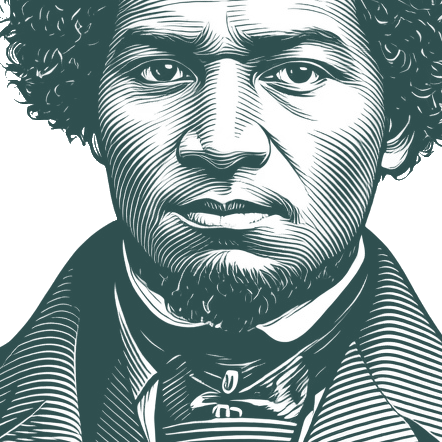
Portrait adapted from
Wikimedia Commons, Engraved by J.C. Buttre from a daguerreotype. (Public domain / CC0)
Also Known As
Birth Name:
Frederick Augustus Washington Bailey
Alternative Names:
Frederick Augustus Washington Baly
•
Fred Bailey
•
Freddie Bailey
Even the matter of religious liberty, which has cost the world more tears, more blood and more agony, than any other interest, will be helped by his presence. I know of no church, however tolerant; of no priesthood, however enlightened, which could be safely trusted with the tremendous power which universal conformity would confer. We should welcome all men of every shade of religious opinion, as among the best means of checking the arrogance and intolerance which are the almost inevitable concomitants of general conformity. Religious liberty always flourishes best amid the clash of competition of rival religious creeds.