It seems to be almost an invariable rule that as real power declines, the symbols of power multiply and intensify in compensation. - Isaac Asimov
""
It seems to be almost an invariable rule that as real power declines, the symbols of power multiply and intensify in compensation.
English
Collect this quote
About
Isaac Asimov
Isaac Asimov (c. 2 January 1920 – 6 April 1992) was a Russian-born American biochemist who was a prolific writer of both fiction and non-fiction, his works include the Foundation series and I, Robot.
Biography information from
Wikiquote·
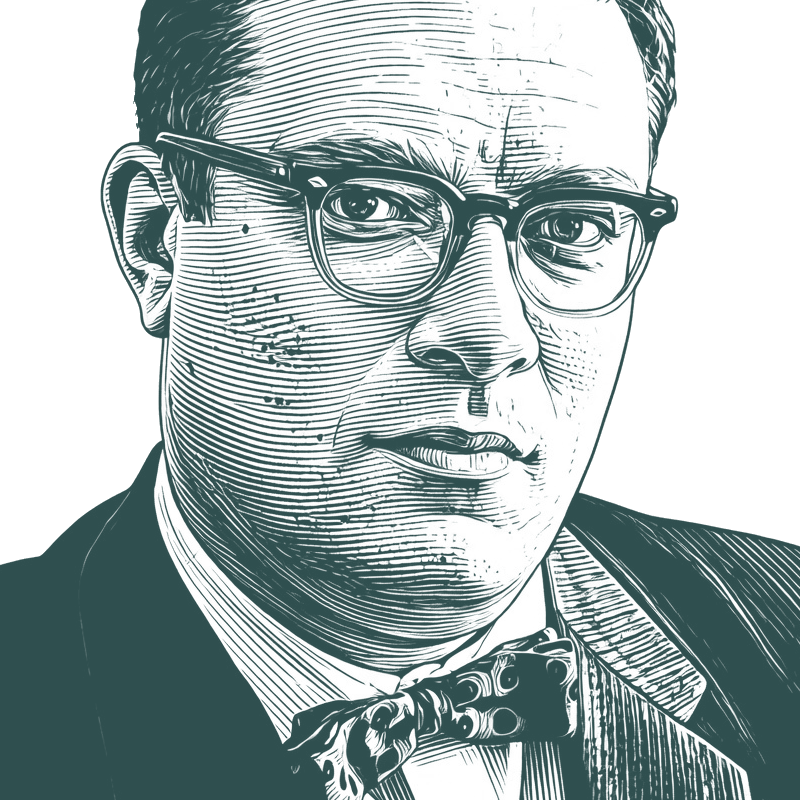
Portrait adapted from
Wikimedia Commons, Phillip Leonian [1] from New York World-Telegram & Sun.[2] (Public domain / CC0)
Also Known As
Alternative Names:
Isaak Osimov
•
Paul French
•
Asimov
•
Isaak Ozimov
•
Itzhak Ozimov
Portrait from Wikimedia Commons. Credit: Phillip Leonian [1] from New York World-Telegram & Sun.[2]. Used under Public domain / CC0. Processed and styled by Quotewise.
PREMIUM FEATURE
Advanced Search Filters
Filter search results by source, date, and more with our premium search tools.
Jael said grimly, "You're overconfident, Mallow. You're ignoring the possibility of a popular rebellion."
Mallow looked up, grim in his turn, "Once and for all, Jael, there is no possibility of a popular rebellion."
I'm sure of the Seldon crisis and the historical validity of their solutions, externally and internally. There are some things I didn't tell Suit right now. He tried to control the Foundation itself by religious forces as he controlled the outer worlds, and he failed, which is the surest sign that in the Seldon scheme, religion is played out.
"Economic control worked differently. And to paraphrase that famous Salvor Hardin quotation of yours, it's a poor nuclear blaster that won't point both ways. If Korell prospered with our trade, so did we. If Korellian factories fail without our trade; and if the prosperity of the outer worlds vanishes with commercial isolation; so will our factories fail and our prosperity vanish.
"And there isn't a factory, not a trading center. not a shipping line that isn't under my control; that I couldn't squeeze to nothing if Sutt attempts revolutionary propaganda. Where his propaganda succeeds, or even looks as though it might succeed, I will make certain that prosperity dies. Where it fails, prosperity will continue, because my factories will remain fully staffed.
"So by the same reasoning which makes me sure that the Korellians will revolt in favor of prosperity, I am sure we will not revolt against it. The game will be played out to its end."
"So then," said Jael, "you're establishing a plutocracy. You're making us a land of traders and merchant princes. Then what of the future?"
Mallow lifted his gloomy face, and exclaimed fiercely, "What business of mine is the future? No doubt Seldon has foreseen it and prepared against it. There will be other crises in the time to come when money power has become as dead a force as religion is now.
Let my successors solve those new problems, as I have solved the one of today.
He [Robert A. Heinlein] always pictured himself a libertarian, which to my way of thinking means "I want the liberty to grow rich and you can have the liberty to starve". It's easy to believe that no one should depend on society for help when you yourself happen not to need such help.
Go Premium
Support Quotewise while enjoying an ad-free experience and premium features.
Our own civilization has a dubious future, and if we can express the reason in brief it is that we find it difficult (perhaps impossible) to cooperate in solving our problems. We are too contentious a species and apparently find our local quarrels to be more important than our overall survival.