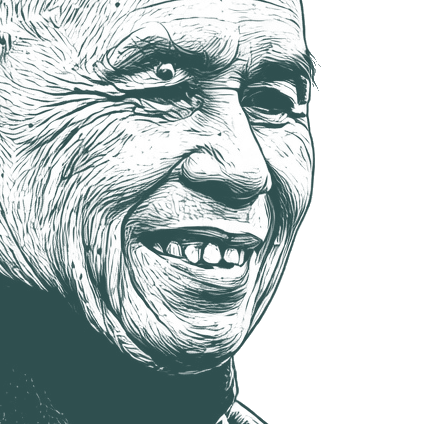
Without suffering, there's no happiness. So we shouldn't discriminate against the mud. We have to learn how to embrace and cradle our own suffering a… - Thích Nhất Hạnh
""
Without suffering, there's no happiness. So we shouldn't discriminate against the mud. We have to learn how to embrace and cradle our own suffering and the suffering of the world, with a lot of tenderness.
Thích Nhất Hạnh (born as Nguyễn Xuân Bảo; 11 October 1926 – 22 January 2022) was an expatriate Vietnamese Buddhist monk, peace activist, and prolific author in both Vietnamese and English. Nhất Hạnh is most commonly referred to as Thích Nhất Hạnh, in which the Vietnamese title Thích (釋), derived from "Thích Ca" or "Thích Già" (釋迦) and applied to all Vietnamese Buddhist monks and nuns, means "of the Shakya (Shakyamuni Buddha) clan".
Biography information from
Wikiquote·
Portrait adapted from
Wikimedia Commons, Duc (pixiduc) from Paris, France. (CC BY-SA)
Also Known As
Alternative Names:
Nhat Hanh
•
Nguyễn Đình Lang
•
Nguyễn Xuân Bảo
•
Trừng Quang
•
Phùng Xuân
•
Thầy Nhất Hạnh
•
Thiền Sư Nhất Hạnh
•
Thich Nhat Hanh
No argument, no reasoning, no blame, just understanding. If you understand, and you show that you understand, you can love, and the situation will change.
Those who are without compassion cannot see what is seen with the eyes of compassion.
Works in ChatGPT, Claude, or Any AI
Add semantic quote search to your AI assistant via MCP. One command setup.
To practice aimlessness is to identify what it is you’re looking for, waiting for, or running after, and let it go. By removing these objects of seeking that are pulling you away from the here and now, you will discover that everything you want is already right here in the present moment. You don’t need to “be someone” or do something in order to be happy and free.