Vietnamese Buddhist monk and activist (1926–2022)
Thích Nhất Hạnh (born as Nguyễn Xuân Bảo; 11 October 1926 – 22 January 2022) was an expatriate Vietnamese Buddhist monk, peace activist, and prolific author in both Vietnamese and English. Nhất Hạnh is most commonly referred to as Thích Nhất Hạnh, in which the Vietnamese title Thích (釋), derived from "Thích Ca" or "Thích Già" (釋迦) and applied to all Vietnamese Buddhist monks and nuns, means "of the Shakya (Shakyamuni Buddha) clan".
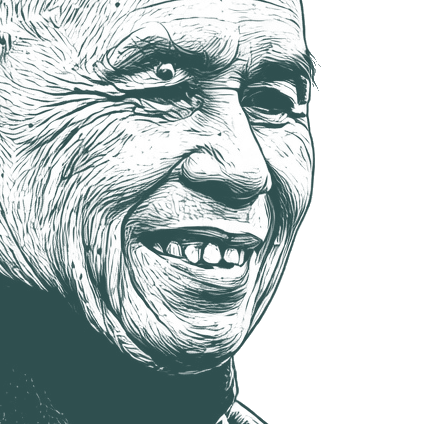
Bio from: Wikiquote (CC BY-SA 4.0) · Portrait adapted from: Wikimedia Commons, Duc (pixiduc) from Paris, France. (CC BY-SA)
From Wikidata (CC0)
Unlimited Quote Collections
Organize your favorite quotes without limits. Create themed collections for every occasion with Premium.
Shouting at someone is not the way to help. If you’ve already shouted, then realize that this is one of your unskillful behaviors. Go back to your in-breath and out-breath and say, I have to repair this. Then go to the other person and apologize, and tell yourself that next time you’ll try your best to remember beforehand and act differently.
Even though life is hard, even though it is sometimes difficult to smile, we have to try. Just as when we wish each other "Good morning," it must be a real "Good morning." Recently, one friend asked me, "How can I force myself to smile when I am filled with sorrow? It isn't natural." I told her she must be able to smile to her sorrow, because we are more than our sorrow. A human being is like a television set with millions of channels. If we turn the Buddha on, we are the Buddha. If we turn sorrow on, we are sorrow. If we turn a smile on, we really are the smile. We can't let just one channel dominate us.
Your good intentions are not enough; you have to be artful. We may be filled with goodwill; we may be motivated by the desire to make the other person happy, but out of our clumsiness, we make them unhappy. Walking, eating, breathing, talking, and working are all opportunities to practice creating happiness inside you and around you. Mindful living is an art, and each of us has to train to be an artist.