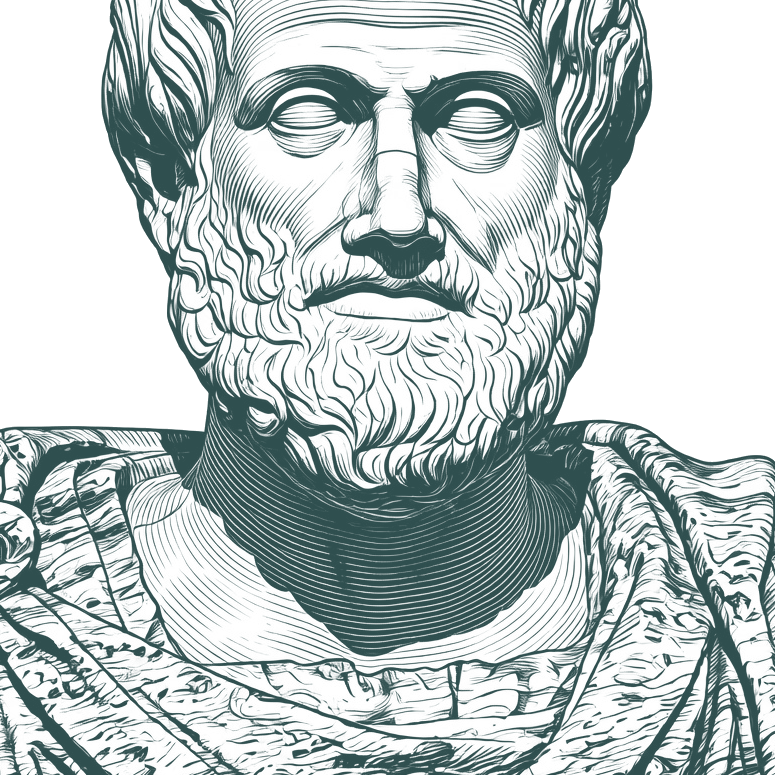
Creative writer has artistic sensibility. He observes the world like any common men. But his vision observes the world quite differently. He can perc… - Aristotle
""
Creative writer has artistic sensibility. He observes the world like any common men. But his vision observes the world quite differently. He can perceive from life-experience what common man cannot see at all. This experience and observation get imaginative colours with the help of artistic sensibility. He creates a world of imaginative reality. His world is more beautiful and artistic than the real world. He is naturally gifted to create the work which has power to move or transport the reader. He gets his raw material from the life. He is critic of life. Criticism is a task of those who write on the creative writings. The word criticism has been derived from the Greek word Kritikos, which means ‘able to discern and judge’ and whoever does the act of judging is called Critic. Criticism is the art of judging the merits and demerits of creative composition.
In the words of Thomas De Quincey criticism may be termed as the literature of knowledge and creative writing as the literature of power. Literature of power deals with life, where as literature of knowledge share information on creative composition. Alexander Pope has rightly said:
“Both from Heaven derive their light These born to judge, as well as those to write.”
He gives equal value to both the critic and the creative writer. To him both are gifted writers, one to write creatively and the other to judge the creativity. But Dryden does not agree with the views of Pope. To him “the corruption of a poet is the generation of a critic.” He believed that those who cannot be good creative writer they become critics and corrupt creativity of the artists. Lessing believed that, “Not every critic is born a genius, but every genius is born a critic of art. He has within himself the evidence of all rules.” He gives respectful place to critics and criticism. He is of the belief that the critics are born genius to judge the work of art.
No critic can ever form accurate judgement unless he possesses the artist’s vision.
English
Collect this quote
About
Aristotle
Aristotle (Ἀριστοτέλης Aristotelēs; 384 BC – 322 BC) was a Greek philosopher and polymath during the Classical period in Ancient Greece. Taught by Plato, he was the teacher of Theophrastus and founder of the Lyceum, the Peripatetic school of philosophy, and the Aristotelian tradition. His writings cover many subjects including physics, biology, zoology, metaphysics, logic, ethics, aesthetics, poetry, theatre, music, rhetoric, psychology, linguistics, economics, politics, meteorology, geology and government. Aristotle provided a complex synthesis of the various philosophies existing prior to him. It was above all from his teachings that the West inherited its intellectual lexicon, as well as problems and methods of inquiry. As a result, his philosophy has exerted a unique influence on almost every form of knowledge in the West and it continues to be a subject of contemporary philosophical discussion.
Biography information from
Wikiquote·
Portrait adapted from
Wikimedia Commons, After Lysippos (Public domain / CC0)
Also Known As
Native Name:
Ἀριστοτέλης
Alternative Names:
the Stagirite
•
Aristotelis
•
Aristoteles
It is the mark of an educated man to look for precision in each class of things just so far as the nature of the subject admits; it is evidently equally foolish to accept probable reasoning from a mathematician and to demand from a rhetorician demonstrative proofs.