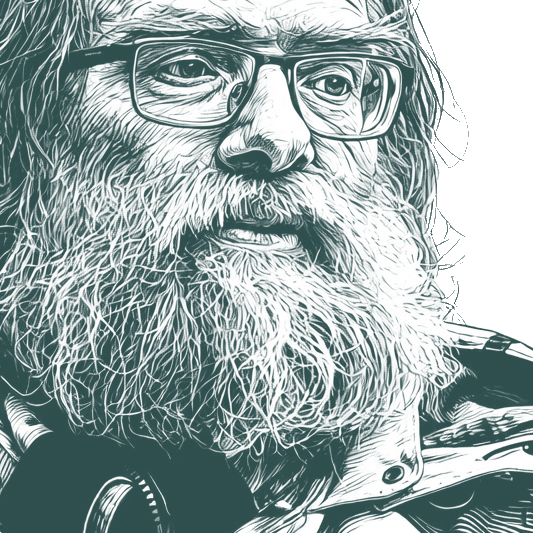
This shows the systematicity of secularist propaganda. While the Eminent Historians thought they could simply enforce their denial of Islamic iconocl… - Koenraad Elst
""
This shows the systematicity of secularist propaganda. While the Eminent Historians thought they could simply enforce their denial of Islamic iconoclasm, their American sympathizer Richard Eaton understood that at least some iconoclasm had to be admitted, but that the blame for it could be passed on to the Hindus. So he spun the story that a few cases of "idol abduction" by Hindu warlords, who re-installed captured icons in their own temples to continue their worship, amounted to the same thing as the thousandfold Islamic cases of destruction of icons. Immediately the secularists seized upon this story and propagated it through all channels. By contrast, my paper refuting this story was completely ignored by the Hindu militants, too smug and lazy to even take notice. The result in a sizable anti-Hindu switch in public opinion, even among common Hindus.
Koenraad Elst (born 7 August 1959) is a Flemish right wing Hindutva author, known primarily for his support of the Out of India theory and the Hindutva movement. Scholars have accused him of harboring Islamophobia.
Of course, this collection of contemporary, often politically motivated articles and statements does not have any proof value. At best, some of the names under the articles could constitute an “argument of authority”, but even that is diluted by their juxtaposition with political agitators and plain cranks. More than an argumentation, this presentation of many conflicting opinions is a dispersionary tactic to keep the opposing party busy with refuting the weirdest viewpoints.
There is one architectural argument which has not been used in the VHP evidence bundle, though it seems quite pertinent to me. The central dome of the Masjid is slightly deformed, and it is supported by a front wall that forms a sort of screen before part of the dome. The reason seems to be that the builders had to adjust the upper part of the Masjid to the walls and pillars of the pre-existing Mandir, which they were incorporating rather than razing them flat and starting totally anew.
PREMIUM FEATURE
Advanced Search Filters
Filter search results by source, date, and more with our premium search tools.
To think highly of the academic world presupposes a link between scientific achievement and academic rank, and this largely makes sense in the exact sciences. In the humanities, especially in the social “science” and literature departments, this link is also deduced, but only as a parasitical extension of the conventions in the exact sciences. Much of what passes for scholarship these days is only ideology wrapped into jargon. Some sophomores take it seriously: having just gained entry into the academic world, they idealize it and are proud of their belonging to a higher world distinct from lay society. And most laymen believe it: over-awed by status, they assume that academic status presupposes both knowledge and objectivity, the basis of academic authority.