ما العمل ؟
- سؤال لاجواب له .. استمر ، تكلم ، ففي الكلام تفريج ، وفيه سلوى القانط المكروب - Leo Tolstoy
""
ما العمل ؟ - سؤال لاجواب له .. استمر ، تكلم ، ففي الكلام تفريج ، وفيه سلوى القانط المكروب
Arabic
Collect this quote
About
Leo Tolstoy
Lev Nikolayevitch Tolstoy [Ле́в Никола́евич Толсто́й, usually rendered Leo Tolstoy, or sometimes Tolstoi] (9 September 1828 – 20 November 1910) was a Russian writer, philosopher and social activist (social critic), whose novels War and Peace and Anna Karenina are internationally praised classics of world literature. He was a major influence on the development of Christian anarchism and pacifism, contributing to such nonviolent resistance movements as those of Mahatma Gandhi, Martin Luther King, Jr., and James Bevel.
Biography information from
Wikiquote·
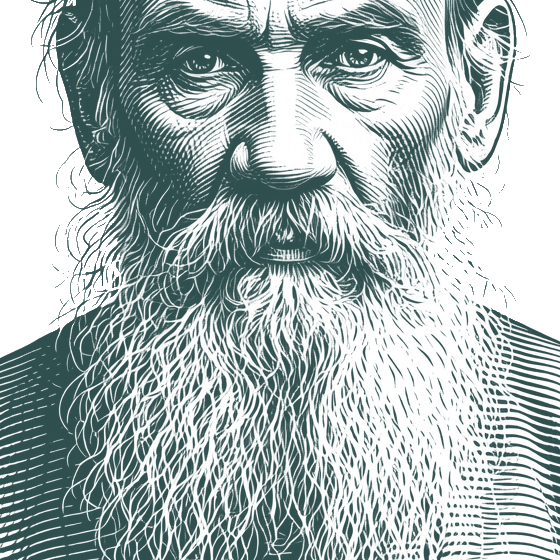
Portrait adapted from
Wikimedia Commons, Sergei Prokudin-Gorskii (Public domain / CC0)
Also Known As
Pen Names:
Л. Н. Т.
•
Л. Н.
Birth Name:
Lev Nikolayevich Tolstoy
Native Name:
Лев Никола́евич Толсто́й
Alternative Names:
Count Lev Nikolayevich Tolstoy
•
Tolstoy, Leo, graf, 1828-1910
•
Tolstoĭ, Lev Nikolaevich, graf, 1828-1910
•
Lev Nikolayevich Tolstoĭ
•
Leo Tolstoi
•
Tolstoĭ, Lev Nikolaevich, graf
•
Tolstoy, Leo, graf
I think that when you remember, remember, remember everything like that, you could go on until you remember what was there before you were in the world.
According to the biblical tradition the absence of work — idleness — was a condition of the first man's state of blessedness before the Fall. The love of idleness has been preserved in fallen man, but now a heavy curse lies upon him, not only because we have to earn our bread by the sweat of our brow, but also because our sense of morality will not allow us to be both idle and at ease. Whenever we are idle a secret voice keeps telling us to feel guilty. If man could discover a state in which he could be idle and still feel useful and on the path of duty, he would have regained one aspect of that primitive state of blessedness. And there is one such state of enforced and irreproachable idleness enjoyed by an entire class of men — the military class. It is this state of enforced and irreproachable idleness that forms the chief attraction of military service, and it always will.
He liked fishing and seemed to take pride in being able to like such a stupid occupation.