The true splendor of science is not so much that it names and classifies, records and predicts, but that it observes and desires to know the facts, w… - Alan Watts
""
The true splendor of science is not so much that it names and classifies, records and predicts, but that it observes and desires to know the facts, whatever they may turn out to be. However much it may confuse facts with conventions, and reality with arbitrary divisions, in this openness and sincerity of mind it bears some resemblance to religion, understood in its other and deeper sense. The greater the scientist, the more he is impressed with his ignorance of reality, and the more he realizes that his laws and labels, descriptions and definitions, are the products of his own thought. They help him to use the world for purposes of his own devising rather than to understand and explain it. The more he analyzes the universe into infinitesimals, the more things he finds to classify, and the more he perceives the relativity of all classification. What he does not know seems to increase in geometric progression to what he knows. Steadily he approaches the point where what is unknown is not a mere blank space in a web of words but a window in the mind, a window whose name is not ignorance but wonder.
English
Collect this quote
About
Alan Watts
Alan Wilson Watts (6 January 1915 – 16 November 1973) was an English philosopher, writer, speaker, and expert in comparative religion.
Biography information from
Wikiquote·
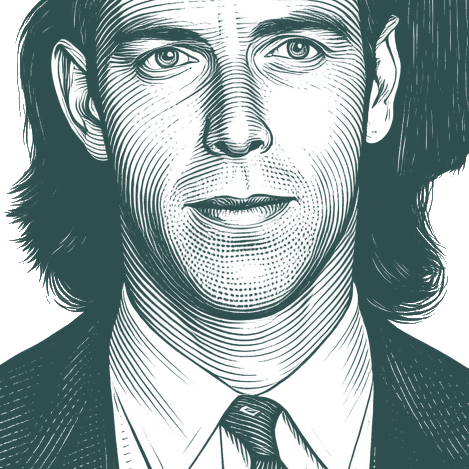
Portrait adapted from
Wikimedia Commons, The University of Vermont Alumni Magazine vol. 39 no. 01, p. 22. (Public domain / CC0)
Also Known As
Alternative Names:
Alan Wilson Watts
•
Alan W. Watts
Just as the bird leaves no trace, no record of its flight upon the void, so human desire can gain nothing out of life. But to realize this is at once to become the sage, since the greatest wisdom lies on the other side, immediately on the other side, of the greatest despair. It is, of course, something more than despair — a joy, a sense of creative life and power, I might even say a security and certainty, beyond any imagining. But this is a way of feeling which the will and the imagination are as unable to bring about as to make one’s bones grow or decrease the speed of the pulse. They must happen by themselves.
At one extreme of its meaning, “myth” is fable, falsehood, or superstition. But at another, “myth” is a useful and fruitful image by which we make sense of life in somewhat the same way that we can explain electrical forces by comparing them with the behavior of water or air. Yet “myth,” in this second sense, is not to be taken literally, just as electricity is not to be confused with air or water. Thus in using myth one must take care not to confuse image with fact, which would be like climbing up the signpost instead of following the road.
Limited Time Offer
Premium members can get their quote collection automatically imported into their Quotewise collections.
Herein lies the crux of the matter. To stand face to face with insecurity is still not to understand it. To understand it, you must not face it but be it.