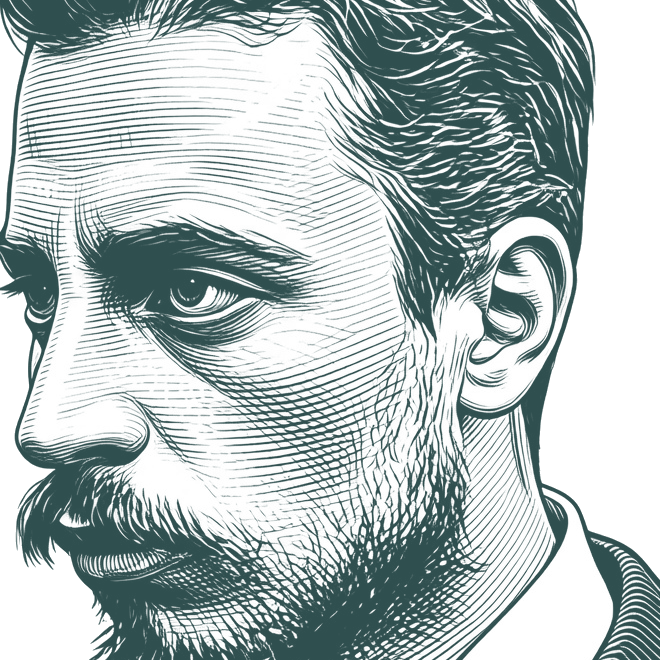
How should we be able to forget those ancient myths that are at the beginning of all peoples, the myths about dragons that at the last moment turn in… - Rainer Maria Rilke
""
How should we be able to forget those ancient myths that are at the beginning of all peoples, the myths about dragons that at the last moment turn into princesses; perhaps all the dragons of our lives are princesses who are only waiting to see us once beautiful and brave. Perhaps everything terrible is in its deepest being something helpless that wants help from us.
So you must not be frightened if a sadness rises up before you larger than any you have ever seen; if a restiveness, like light and cloudshadows, passes over your hands and over all you do. You must think that something is happening with you, that life has not forgotten you, that it holds you in its hand; it will not let you fall. Why do you want to shut out of your life any uneasiness, any miseries, or any depressions? For after all, you do not know what work these conditions are doing inside you.
René Karl Wilhelm Johann Josef Maria Rilke (4 December 1875 – 29 December 1926), better known as Rainer Maria Rilke, was a Bohemian-Austrian poet and novelist, generally considered the German language's greatest poet of the 20th century. His writings include one novel, several collections of poetry and several volumes of correspondence in which he invokes images that focus on the difficulty of communion with the ineffable in an age of disbelief, solitude and anxiety. These themes position him as a transitional figure between traditional and modernist writers.
Alternative Names:
René Karl Wilhelm Johann Josef Maria Rilke
•
René Maria Cäsar Rilke
•
Rainer Karl Wilhelm Johann Josef Maria Rilke
•
Li-erh-kʻo
•
Rainer Maria Rielke
•
René Rilke
•
Rainer Mariyah Rilḳeh
•
Rainŏ Maria Rilkʻe
•
Reiner Marie Rilke
•
Rene Karl Wilhelm Johann Josef Maria Rilke
•
Rene Rilke
Related quotes. More quotes will automatically load as you scroll down, or you can use the load more buttons.
Shorter versions of this quote
Perhaps all the dragons in our lives are princesses who are only waiting to see us act, just once, with beauty and courage. Perhaps everything that frightens us is, in its deepest essence, something helpless that wants our love.
I want to be with those who know secret things or else alone.
The demands which the difficult work of love makes upon our development are more than life-size, and as beginners we are not up to them. But if we nevertheless hold out and take this love upon us as burden and apprenticeship, instead of losing ourselves in all the light and frivolous play, behind which people have hidden from the most earnest earnestness of their existence — then a little progress and alleviation will perhaps be perceptible to those who come long after us; that would be much.
A work of art is good if it has grown out of necessity.