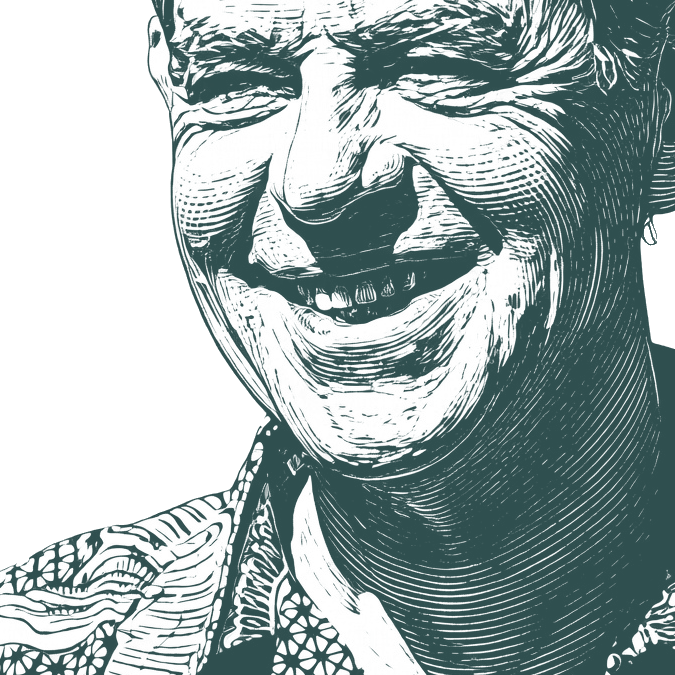
And if there was no Fall, what then of the need for Redemption? What god was offended and by whom? Some especially touchy cave bear whose skull had b… - Joseph Campbell
""
And if there was no Fall, what then of the need for Redemption? What god was offended and by whom? Some especially touchy cave bear whose skull had been improperly enshrined?
English
Collect this quote
About
Joseph Campbell
Joseph Campbell (26 March 1904 – 30 October 1987) was an American professor, writer, and orator most famous for his work in the fields of comparative mythology and comparative religion.
When you find a writer who really is saying something to you, read everything that writer has written and you will get more education and depth of understanding out of that than reading a scrap here and a scrap there and elsewhere. Then go to people who influenced that writer, or those who were related to him, and your world builds together in an organic way that is really marvelous.
The word zen itself is a Japanese mispronunciation of the Chinese word ch’an, which, in turn, is a Chinese mispronunciation of the Sanskrit dhyana, meaning “contemplation, meditation.” Contemplation, however, of what?
Let us imagine ourselves for a moment in the lecture hall where I originally presented the material for this chapter. Above, we see the many lights. Each bulb is separate from the others, and we may think of them, accordingly, as separate from each other. Regarded that way, they are so many empirical facts; and the whole universe seen that way is called in Japanese ji hokkai, “the universe of things.”
But now, let us consider further. Each of those separate bulbs is a vehicle of light, and the light is not many but one. The one light, that is to say, is being displayed through all those bulbs; and we may think, therefore, either of the many bulbs or of the one light. Moreover, if this or that bulb went out, it would be replaced by another and we should again have the same light. The light, which is one, appears thus through many bulbs.
Analogously, I would be looking out from the lecture platform, seeing before me all the people of my audience, and just as each bulb seen aloft is a vehicle of light, so each of us below is a vehicle of consciousness. But the important thing about a bulb is the quality of its light. Likewise, the important thing about each of us is the quality of his consciousness. And although each may tend to identify himself mainly with his separate body and its frailties, it is possible also to regard one’s body as a mere vehicle of consciousness and to think then of consciousness as the one presence here made manifest through us all. These are but two ways of interpreting and experiencing the same set of present facts. One way is not truer than the other. They are just two ways of interpreting and experiencing: the first, in terms of the manifold of separate things; the second, in terms of the one thin
"The look that one directs at things, both outward and inward, as an artist, is not the same as that with which one would regard the same as a man, but at once colder and more passionate. As a man, you might be well-disposed, patient, loving, positive, and have a wholly uncritical inclination to look upon everything as all right, but as an artist your daemon constrains you to "observe", to take note, lightning fast and with hurtful malice, of every detail that in the literary sense would be characteristic, distinctive, significant, opening insights, typifying the race, the social or the psychological mode, recording all as mercilessly as though you had no human relationship to the observed object whatever."